Most homeowners are familiar with the concept of renovation—updating a kitchen, replacing old windows, or adding a fresh coat of paint. However, as energy prices rise and the urgency of climate change grows, a new standard for home improvement has emerged. It is called a deep energy retrofit, and it goes far beyond cosmetic changes.
While standard renovations focus on aesthetics or basic repairs, a deep retrofit fundamentally changes how a house functions. It transforms drafty, expensive-to-run structures into high-performance homes that are comfortable, healthy, and future-proof. Whether you are looking to reduce your carbon footprint or simply want a warmer home in winter, understanding the scope of “home decarbonization” is the first step toward a more sustainable future.
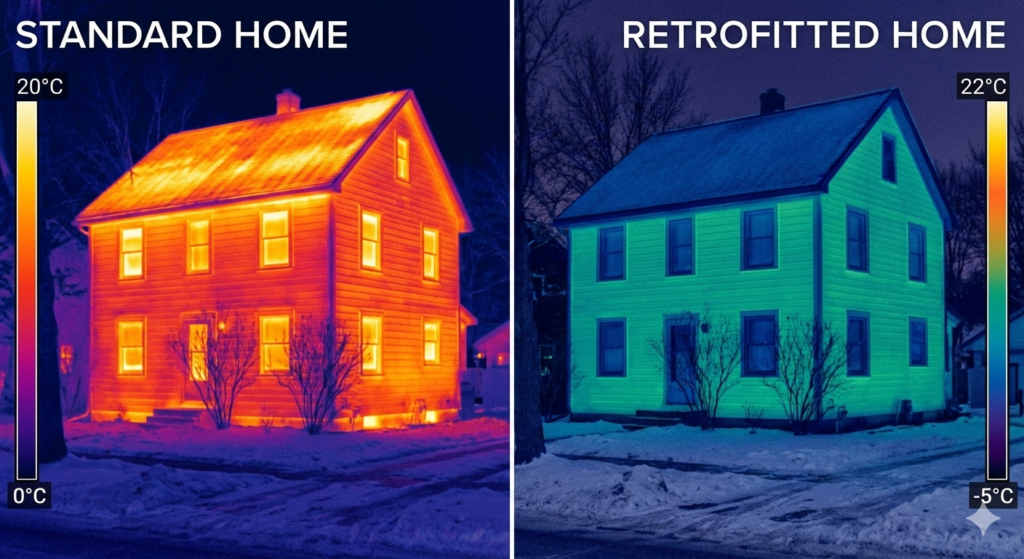
What Is a Deep Energy Retrofit?
A deep energy retrofit is a holistic renovation process designed to reduce a building’s energy consumption by at least 50% to 75%. Unlike piecemeal upgrades, it systematically addresses the thermal envelope, airtightness, and mechanical systems simultaneously to achieve superior energy efficiency, often aiming for Net Zero standards.
To truly understand the retrofit definition, one must look at the house as a system. In a standard upgrade, you might replace a gas furnace with a newer model but leave the walls uninsulated. In a deep retrofit, you insulate the walls and stop air leaks first, which reduces the heating load so significantly that the new heating system can be much smaller and cheaper to run.
The goal is not just to save money on utility bills, though that is a major benefit. The primary objective is to improve the building physics—managing heat, air, and moisture—to create an environment that remains stable regardless of the weather outside.
The Core Components of a Whole House Retrofit
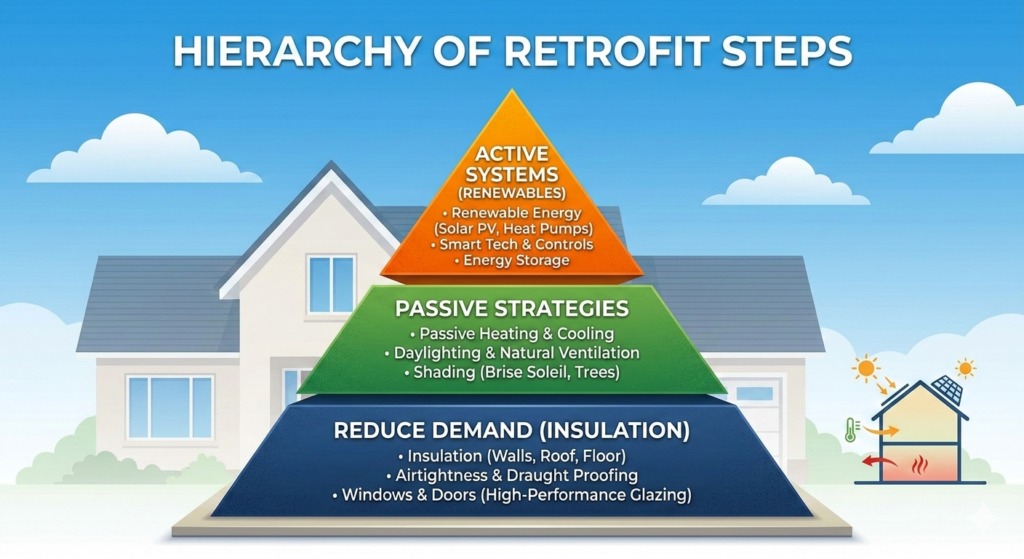
A successful whole house retrofit relies on a “Fabric First” approach. This means prioritizing the structure of the building (the fabric) before thinking about solar panels or heat pumps. If you generate clean energy but your house leaks heat like a sieve, you are still wasting energy.
1. The Thermal Envelope
This includes your walls, roof, and floor. In a deep retrofit, insulation levels are increased significantly—often doubling or tripling standard code requirements. This acts as a thick blanket wrapped around the home.
2. Airtightness
Drafts are the enemy of efficiency. Sealing gaps around windows, doors, and service penetrations prevents warm air from escaping and cold air from entering. This is distinct from ventilation; airtightness is about eliminating uncontrolled air movement.
3. High-Performance Windows
Single or standard double-pane windows are often the weakest link in a home’s defense. Deep retrofits typically utilize triple-glazed windows with thermally broken frames to minimize heat loss and prevent condensation.
4. Controlled Ventilation
Once a home is airtight, it needs a set of “mechanical lungs.” Systems like Mechanical Ventilation with Heat Recovery (MVHR) supply fresh filtered air 24/7 while recovering the heat from the stale exhaust air.
5. Efficient Heating and Cooling
With the demand for heat drastically reduced by the steps above, fossil fuel boilers can be replaced with efficient electric systems, such as heat pumps, completing the home decarbonization process.
Why Home Decarbonization Matters Now
The push for energy efficiency upgrades is driven by both economics and environmental necessity. Existing housing stock contributes a massive percentage to global carbon emissions. By retaining the structure of an old house and upgrading its performance, you save the “embodied carbon” that would have been spent building a new house from scratch.
However, the benefits are also deeply personal. A retrofitted home offers:
- Thermal Comfort: No more cold spots or drafts. The temperature remains consistent room-to-room.
- Health: Continuous ventilation filters out pollutants, pollen, and humidity, reducing the risk of mold and respiratory issues.
- Silence: High levels of insulation and triple glazing significantly block outside noise.
For those interested in the practical application of these principles, studying successful projects is essential. Detailed accounts of similar projects can provide a realistic roadmap. Books are excellent for seeing how these high-level concepts are applied to real-world homes with various constraints.
The Deep Retrofit Process: Where to Start
Embarking on a deep retrofit is a significant undertaking that requires careful planning. It is not a weekend DIY project.
- Assessment: Start with a comprehensive energy audit. Professionals use blower door tests and thermal imaging to identify exactly where your home is losing energy.
- Design: Work with an architect or energy consultant who specializes in building physics. They will model your home’s energy performance to predict the outcome of different upgrades.
- Phasing: You do not always have to do everything at once. A “step-by-step” plan allows you to upgrade components over time (e.g., windows this year, external insulation next year) without locking in future problems.
- Execution: Hire contractors who understand the importance of details. In a deep retrofit, a small gap in the insulation or a torn airtight membrane can undermine the performance of the whole system.
Conclusion
A deep energy retrofit is an investment in the longevity of your property and the quality of your life. By moving beyond superficial repairs and embracing a whole house retrofit strategy, you turn a liability into an asset. While the learning curve can be steep, the result is a home that is resilient, healthy, and prepared for a low-carbon future. Whether you are driven by financial savings or a desire to contribute to home decarbonization, the path starts with understanding the building physics behind your walls.
Frequently Asked Questions (FAQ)
1. How much does a deep energy retrofit cost?
The cost varies wildly depending on the size of the home, the current condition, and the target energy standard. It typically costs significantly more than a standard renovation due to the high-quality materials (insulation, triple glazing) and specialized labor required. However, the return includes lower utility bills, increased property value, and avoided maintenance costs.
2. Is a deep energy retrofit worth it for old houses?
Yes, older homes often benefit the most. They usually have the poorest initial energy performance, so the “delta” or improvement is massive. However, heritage homes require specific care—such as using breathable insulation materials—to ensure the structural timber and masonry remain healthy.
3. Can I live in my house during a deep retrofit?
It depends on the scope. If you are doing an “external” retrofit (wrapping the outside of the house in insulation), you can often stay inside. However, if you are gutting the interior to install air barriers, new plumbing, and internal insulation, it is usually safer and faster to move out temporarily.
4. What is the difference between a shallow and deep retrofit?
A shallow retrofit might involve blowing insulation into the attic and changing lightbulbs. It might save 10-15% on energy bills. A deep retrofit addresses the entire envelope and systems holistically, aiming for savings of 50-90% and often achieving Passive House or Net Zero standards.