As families grow and spatial needs change, the traditional housing solution has been either to move to a larger property or to pour a massive concrete slab and build a standard extension. Both options come with severe environmental and financial costs. The traditional construction of a new wing often relies heavily on carbon-intensive materials like steel and cement, creating a massive spike in upfront emissions.
However, expanding your living space does not have to mean expanding your carbon footprint. By approaching your project with a focus on building physics, smart material choices, and energy efficiency, you can create a beautiful, high-performance space. This guide explores how to add the square footage your family needs while actively protecting the environment and lowering your future utility bills.
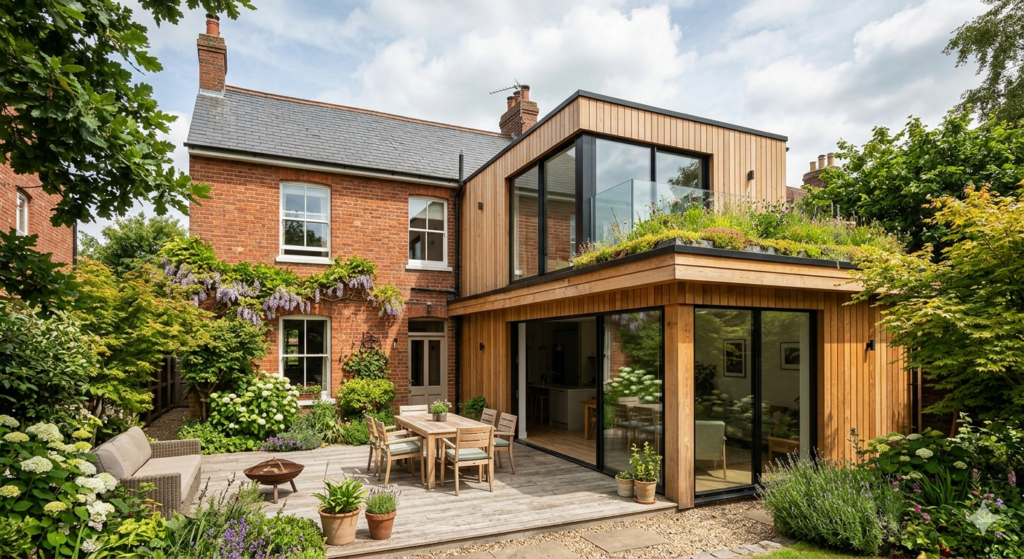
What is a Sustainable Home Extension?
What is a sustainable home extension? A sustainable home extension, or green addition, is a building expansion designed to minimize environmental impact. It achieves this by using low-carbon materials, maximizing energy efficiency, and integrating passive solar design to add living space without creating a massive operational or embodied carbon debt.
The core philosophy behind an eco friendly annex is viewing the new structure not just as extra room, but as an opportunity to improve the overall performance of the property. When designed correctly, an extension can act as a thermal buffer, shielding the older, draftier part of the house from harsh weather while generating its own renewable energy.
To achieve this, homeowners must look past the immediate aesthetic desires and focus heavily on the structural envelope.
Planning Your Green Addition
The most critical phase of any building project happens long before the first shovel hits the dirt. A truly green addition relies heavily on “passive” design principles. This means utilizing the natural environment to do the heavy lifting for heating, cooling, and lighting.
- Orientation: If possible, design the extension to maximize southern exposure (in the Northern Hemisphere). This allows the low winter sun to naturally heat the space, reducing the need for mechanical heating.
- Shading: To prevent overheating in the summer, incorporate deep roof overhangs or external louvers that block the high summer sun while letting the winter sun inside.
- Zoning: Consider the thermal relationship between the old house and the new annex.
Visualizing how the sun interacts with your new layout at different times of the year is essential. Using accessible home design software (SketchUp or Planner 5D) allows you to build a 3D model of your home, test different roof pitches, and simulate daylight tracking to ensure your design is optimized for passive solar gain before you hire a structural engineer.
Materials Matter: The Timber Frame Extension
When it comes to embodied carbon, the structural skeleton of your extension is the most impactful element. Standard extensions rely heavily on concrete blocks and steel I-beams, both of which require extreme heat and fossil fuels to manufacture.
The sustainable alternative is a timber frame extension. Wood is a renewable resource that physically sequesters (stores) carbon dioxide absorbed by the tree during its growth. By using responsibly sourced timber for the walls and roof structure, your extension can act as a carbon sink.
But what about heavy structural loads? Where builders once relied exclusively on steel beams to span large open-plan rooms, sustainable architects now specify glulam beams (glued laminated timber). These are manufactured by bonding layers of dimensional lumber together under high pressure. Pound for pound, glulam is stronger than steel, exceptionally fire-resistant, and carries a fraction of the embodied carbon.
Energy Efficiency and the Junction
A new extension is relatively easy to make energy-efficient. You can pack the timber walls with thick, natural insulation (like hemp or cellulose), install triple-glazed windows, and wrap the exterior in an airtight membrane.
However, the real challenge lies at the junction where the new, highly efficient extension meets the old, thermally leaky house. If this connection is not detailed perfectly, it creates a massive thermal bridge. Heat will bypass the new thick walls and escape straight through the old masonry, causing localized condensation and mold.
To prevent this, the insulation layer of the new extension must continuously link up with the thermal envelope of the existing building. If you are integrating this new build into a broader property upgrade, consulting our guide on Retrofitting Old Houses will help you navigate the complex physics of tying a sealed, modern annex into a breathable, historic structure safely.
Conclusion
Building a green addition is the smartest way to adapt your current property for the future. By following a comprehensive guide to sustainable home extensions, homeowners can avoid the devastating environmental impact of traditional concrete and steel construction. By embracing a timber frame extension, utilizing innovative materials like glulam beams, and prioritizing passive solar design, you can construct an eco friendly annex that is beautiful, incredibly comfortable, and virtually carbon-neutral. Careful planning ensures that your new space enhances your lifestyle without borrowing from the planet’s future.
Frequently Asked Questions (FAQ)
1. Is a timber frame extension cheaper than a brick or block extension?
Timber framing is often comparable in price to blockwork, but it can be more cost-effective when factoring in labor time. Timber frames are usually prefabricated off-site and craned into place, drastically reducing the time a construction crew spends on your property and minimizing weather delays.
2. What are glulam beams made of?
Glulam (glued laminated timber) beams are made from layers of solid dimensional wood (often Douglas fir, spruce, or larch) bonded together with durable, moisture-resistant structural adhesives. Because the grain of all layers runs parallel to the beam’s length, it provides immense load-bearing strength.
3. Do I need planning permission for an eco-friendly annex?
In many jurisdictions, small extensions fall under “permitted development” rights and do not require full planning permission, provided they meet specific size and height limits. However, because you are altering the footprint, you must still comply with strict building regulations regarding structural safety and thermal performance. Always check with your local authority before building.
4. Can a home extension be Net Zero?
Yes. If the extension is designed with a highly insulated, airtight envelope and features roof-mounted solar PV panels that generate more energy than the extension uses for heating and lighting, that specific addition can achieve Net Zero performance.