Owning a historic property is a privilege that comes with a unique set of responsibilities. When it is time to upgrade the property for the 21st century, homeowners often find themselves caught between two opposing forces. On one side is the urgent need to improve energy efficiency and lower carbon emissions. On the other side is a complex web of legal protections and aesthetic requirements designed to preserve history.
Merging sustainability with historic preservation is entirely possible, but it requires a careful, highly educated approach. Slapping modern plastic insulation or unapproved solar panels onto an antique facade will result in structural damage and severe legal penalties. By mastering a few fundamental strategies, you can successfully navigate these legal and physical constraints, ensuring your home becomes both green and historically secure.
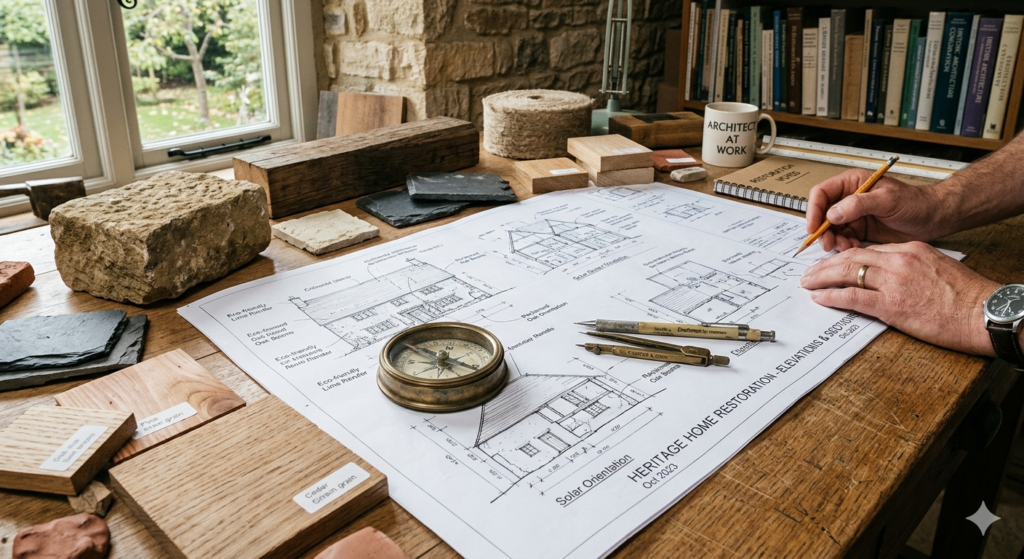
What is Eco-Friendly Heritage Restoration?
What are the best tips for eco friendly heritage restoration? The top tips for eco friendly heritage restoration involve balancing modern energy efficiency with strict historic preservation. This requires using traditional, breathable materials like lime plaster, carefully navigating conservation area rules, securing listed building consent, and upgrading the thermal envelope without damaging original architectural features.
The core philosophy of upgrading an older property is that the building itself dictates the materials you can use. You cannot force modern, impermeable building practices onto a structure designed to breathe.
An eco-friendly restoration honors the original craftsmanship by utilizing natural, low-carbon materials that work in harmony with the existing masonry and timber. It also means doing your administrative homework long before the physical labor begins.
Navigating Legalities: Listed Building Consent
The biggest hurdle in any historic renovation is the legal framework. If your property is officially recognized for its historical significance (such as a Listed Building in the UK or placed on the National Register of Historic Places in the US), you do not have free reign to alter it.
Before upgrading windows, adding exterior insulation, or changing the roof, you must apply for listed building consent. This is a rigorous legal process where heritage officers review your plans to ensure they do not permanently alter the building’s character. Proceeding without this consent is a criminal offense and can result in massive fines or forced reversal of the work at your own expense.
Even if your specific house is not listed, it may be subject to strict conservation area rules. These local zoning laws typically protect the aesthetic of the entire street or neighborhood. They often dictate the type of materials you can use on the facade, restricting the use of modern uPVC windows or visible solar panels on street-facing roofs.
The Importance of Breathability: Lime Plaster
Once the legal hurdles are cleared, the physical work must rely on appropriate materials. The most common mistake in historic restoration is the use of modern Portland cement.
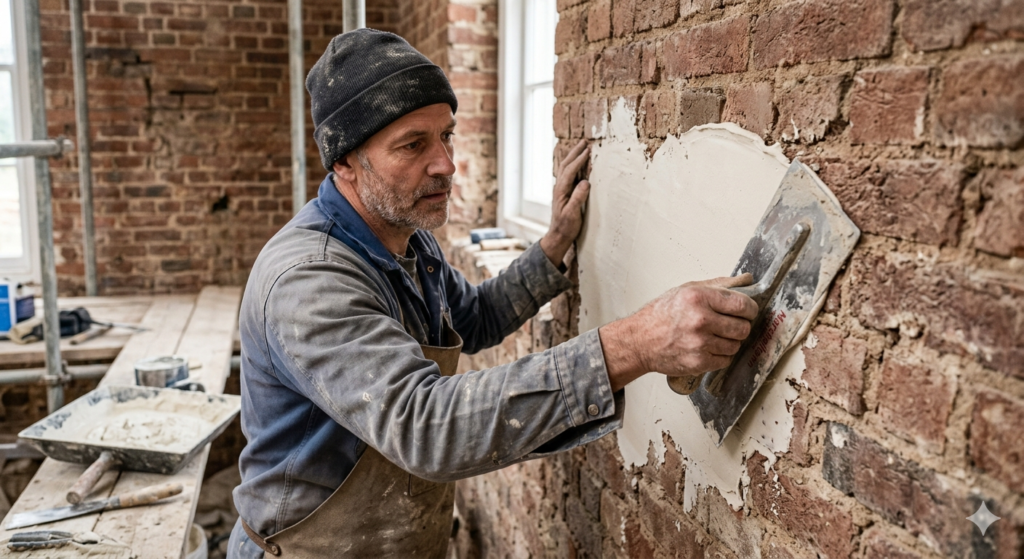
Old brick and stone buildings manage moisture by absorbing rainwater and evaporating it away via wind and indoor heat. If you cover historic interior walls with modern gypsum plaster or patch the exterior with hard cement, you destroy this natural breathability. The trapped moisture will quickly degrade the structural timber and cause the brick faces to shatter during a freeze.
Instead, eco-friendly restorers use lime plaster. Lime is a traditional, highly breathable material that allows trapped water vapor to escape harmlessly. Furthermore, lime mortar is softer than historic brick, meaning it accommodates the natural shifting and settling of an old house without cracking the masonry.
Choosing the Right Finishes: Breathable Paint
Using breathable plaster and natural insulation is useless if you seal the wall with a layer of liquid plastic. Standard latex and acrylic paints act as a vapor barrier. If applied over historic walls, they will eventually bubble, peel, and trap moisture inside the structure.
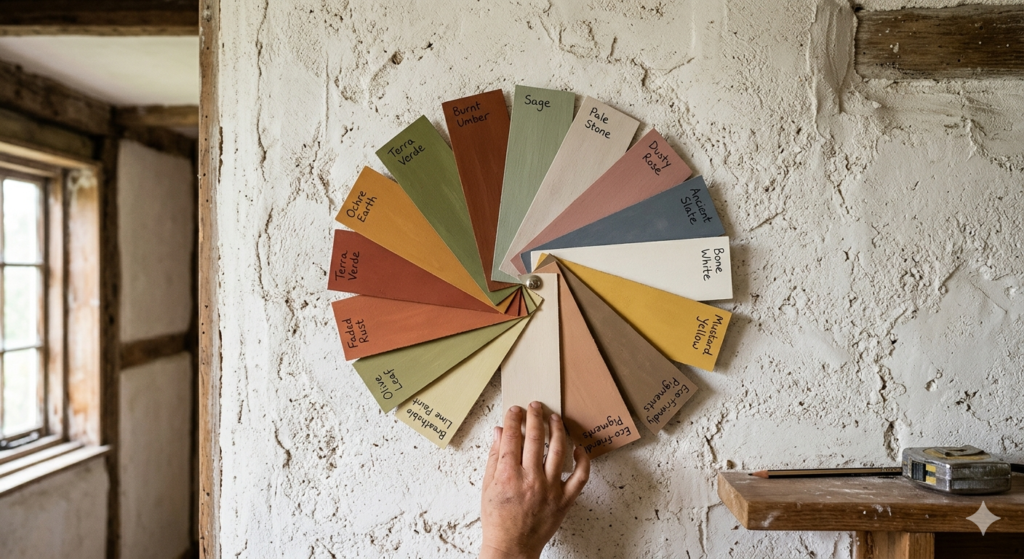
To maintain the breathability of your newly restored walls, you must use breathable paint. These include traditional lime washes, clay-based paints, and mineral silicate paints. They chemically bond to the wall and allow moisture to diffuse straight through the pigment.
Because these natural paints do not contain volatile organic compounds (VOCs), they significantly improve your indoor air quality. Testing colors and finishes using lime wash allows you to find the perfect historical hue without compromising the building physics.
Energy Efficiency Without Aesthetic Damage
Improving the energy performance of a historic home requires subtlety. Because you often cannot apply thick external insulation or install double-glazed plastic windows, you must look for invisible upgrades.
- Secondary Glazing: Instead of replacing original timber sash windows, restore them and add a discrete internal glass panel. This provides the thermal benefits of double glazing without altering the exterior look.
- Loft Insulation: Adding massive amounts of natural sheep’s wool or cellulose insulation to the attic floor is cheap, highly effective, and entirely hidden from view.
- Draught-Proofing: Sealing the invisible gaps around floorboards, doors, and chimneys dramatically reduces heat loss.
For a comprehensive roadmap on how to sequence these delicate upgrades safely, refer to our detailed guide on Retrofitting Old Houses. By prioritizing these hidden, fabric-first improvements, you can dramatically lower your home’s carbon footprint while keeping the heritage inspectors perfectly happy.
Conclusion
Successfully updating a historic property is a testament to careful planning and a deep respect for the past. Implementing the best tips for eco friendly heritage restoration means understanding that modern building chemicals have no place in ancient structures. By diligently navigating conservation area rules and securing listed building consent, you protect yourself legally. By exclusively utilizing traditional lime plaster and breathable paint, you protect the building physically. Ultimately, a sensitive restoration proves that preserving our architectural history and protecting our environmental future are perfectly compatible goals.
Frequently Asked Questions (FAQ)
1. Can I install solar panels on a listed building?
It is difficult, but not impossible. Heritage officers generally prohibit solar panels on the primary street-facing elevations because they disrupt the historic character. However, if the panels can be placed on a hidden rear extension, a modern outbuilding, or laid flat in a discrete valley roof, you may be granted listed building consent.
2. Is lime plaster more expensive than standard modern plaster?
Yes. The raw materials for lime plaster can be slightly more expensive, but the primary cost is labor. Applying lime requires specialized, traditional skills and takes significantly longer to cure between coats than modern gypsum. However, it is the only safe option for solid masonry walls.
3. What happens if I make changes without listed building consent?
Making unauthorized changes to a listed building is a criminal offense. Local authorities can issue an enforcement notice compelling you to reverse all the work and restore the building to its exact previous state at your own expense. You could also face severe financial penalties or prosecution.
4. Can I use spray foam insulation in the roof of my historic home?
Heritage organizations strongly advise against using closed-cell spray foam directly onto the underside of historic timber roofs. It traps moisture against the wooden rafters, hiding leaks and accelerating severe structural rot. Once applied, it is also incredibly difficult and damaging to remove.