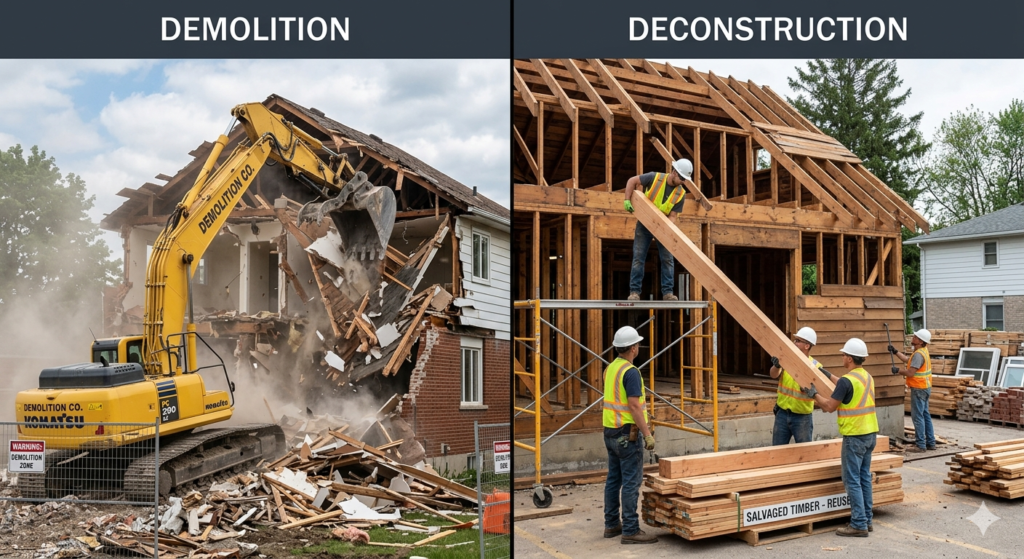
Traditional demolition is fast, violent, and highly destructive. An excavator can tear down a home in a matter of hours, reducing perfectly good lumber, vintage bricks, and historic doors into a pile of shattered debris destined for the local landfill. However, as the construction industry shifts toward more sustainable practices, a radically different approach to taking a house apart is gaining traction.
If you are planning a major renovation, viewing your existing walls and floors as a liability is a costly mistake. Instead, your home is a temporary bank of highly valuable materials waiting to be harvested. By learning the physical, manual labor techniques required to carefully “unbuild” a structure, you can preserve history, protect the environment, and significantly reduce your project’s material budget.
Understanding the Unbuilding Process
How do you define building deconstruction? Building deconstruction is the systematic dismantling of a structure in the reverse order of its construction. Unlike demolition, which relies on destructive force to create waste, deconstruction utilizes careful manual labor to maximize the salvage, reuse, and reclamation of building materials.
When you define building deconstruction, the core philosophy is patience. Construction is the act of putting pieces together; deconstruction is the meticulous unfastening of those same pieces.
This approach is the physical backbone of the circular economy. It requires a shift in mindset from treating materials as disposable “trash” to recognizing them as valuable inventory. The process is generally broken down into three distinct phases: soft stripping, architectural harvesting, and structural dismantling.
Phase 1: Soft Stripping the Interior
The first physical step of any salvage renovation is the soft stripping phase. This involves removing all the non-structural, surface-level elements of the home before any heavy dismantling begins.
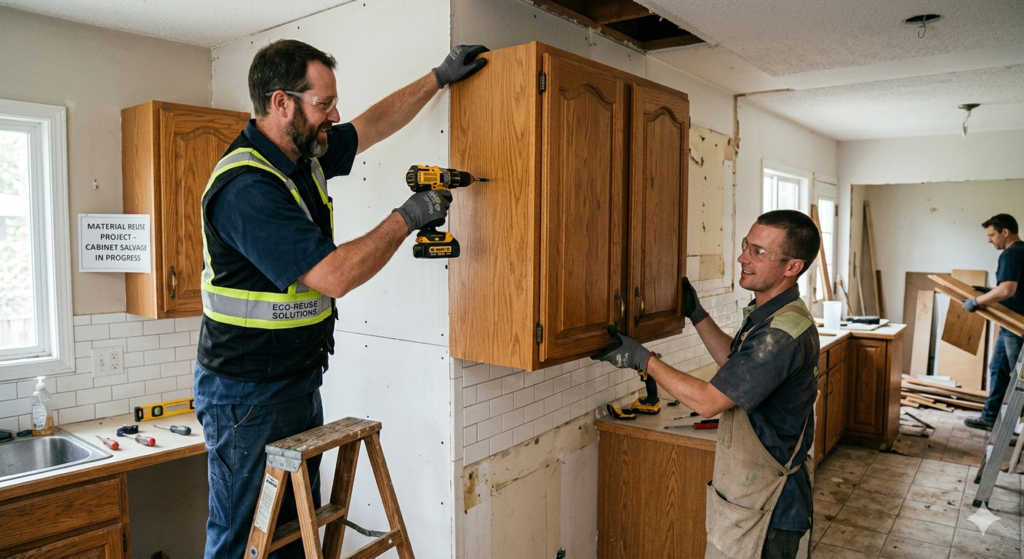
During this stage, workers carefully remove carpets, light fixtures, window blinds, appliances, and kitchen cabinets. The goal is to clear the space completely while keeping these easily reusable items entirely intact. Because these items are not holding the house up, they can be unscrewed and unbolted relatively quickly.
Soft stripping requires excellent organization on site. As items are removed, they must be safely sorted, labeled, and stored away from the main work area to prevent damage as the heavier deconstruction work begins.
Phase 2: Harvesting Architectural Salvage
Once the house is stripped down to its bare finishes, the focus shifts to high-value architectural salvage. These are the character-defining elements of a home that hold significant financial and historical worth.
This phase targets solid wood doors, stained glass windows, fireplace mantels, cast-iron radiators, and historic baseboard trim. Because these items are often embedded in old, brittle plaster, removing them requires extreme finesse and the correct equipment. Using the right leverage, such as a heavy duty pry bar or reciprocating saw, allows you to gently separate baseboards from the wall without snapping the historic timber.
Harvesting these materials is the most financially rewarding part of the process. Even if you do not plan to reuse them in your own home, architectural salvage yards will often purchase vintage fixtures, offsetting the labor costs of your renovation.
Phase 3: Structural Reclamation
The final and most labor-intensive stage is structural reclamation. This is where the actual “bones” of the house are taken apart.
Workers strip away the drywall or lath and plaster to expose the timber framing. Then, the process of denailing begins. Floor joists, roof rafters, and wall studs are carefully unbolted, unscrewed, or hammered apart. The nails are pulled out by hand, leaving behind clean, seasoned lumber that is often structurally superior to modern, fast-growth timber.
This phase also involves cleaning and stacking old bricks and chipping away old mortar so they can be re-laid. To fully grasp how this reclaimed structure is then fed back into the design of your new home, refer to our foundational Circular Construction Guide.
Conclusion
Transitioning away from the destructive habits of traditional demolition is vital for the future of sustainable building. By learning to define building deconstruction as a highly skilled salvage operation, homeowners and builders can drastically reduce landfill waste. While the physical acts of soft stripping, preserving architectural salvage, and engaging in structural reclamation take more time than swinging a wrecking ball, the rewards are unmatched. You not only save money on disposal fees but also preserve the rich history embedded in your home’s original materials.
Frequently Asked Questions (FAQ)
1. Is building deconstruction more expensive than demolition?
It depends on how you calculate the costs. Deconstruction requires significantly more manual labor hours, meaning the upfront workforce cost is higher. However, you eliminate the massive fees associated with renting dumpsters and landfill tipping. Furthermore, the value of the salvaged materials—either reused in your project or sold—often offsets the extra labor costs entirely.
2. How much longer does deconstruction take compared to demolition?
While a mechanical excavator can demolish a standard single-family home and load it into trucks in 1 to 2 days, full manual deconstruction typically takes 1 to 2 weeks. The timeline depends heavily on the size of the crew, the complexity of the structure, and how much material is being saved.
3. Can I deconstruct a house that contains asbestos or lead paint?
Yes, but extreme caution and professional intervention are required. Hazardous materials like asbestos (often found in old flooring, insulation, or siding) and lead paint must be abated by certified professionals before the general deconstruction crew can safely dismantle the rest of the structure.
4. What is “denailing” and why is it important?
Denailing is the tedious process of removing every nail, screw, and staple from salvaged lumber. It is critical because reclaimed wood cannot be safely run through modern saws or planers if hidden metal is left inside, as it will destroy the expensive saw blades and pose a severe safety hazard to the carpenter.