A major home renovation is an exciting journey, but it often produces a shocking amount of debris. From torn-up floorboards to offcuts of plumbing pipe, the default action on most job sites is to throw everything directly into a rented dumpster. However, this linear approach is both expensive and environmentally detrimental.
By actively repurposing construction waste, homeowners can transform expensive disposal problems into unique, bespoke design features. Treating job site debris as a resource rather than trash is a core pillar of sustainable building. With a bit of creativity and some basic DIY skills, you can salvage these materials to add rich, historic character to your home while drastically reducing your environmental footprint.
What is Repurposing in Construction?
What is repurposing construction waste? Repurposing construction waste involves taking discarded building materials—such as old timber, broken bricks, or metal offcuts—and creatively transforming them into new, functional items. This practice reduces landfill burden, lowers project disposal costs, and adds unique historical character to a home renovation.
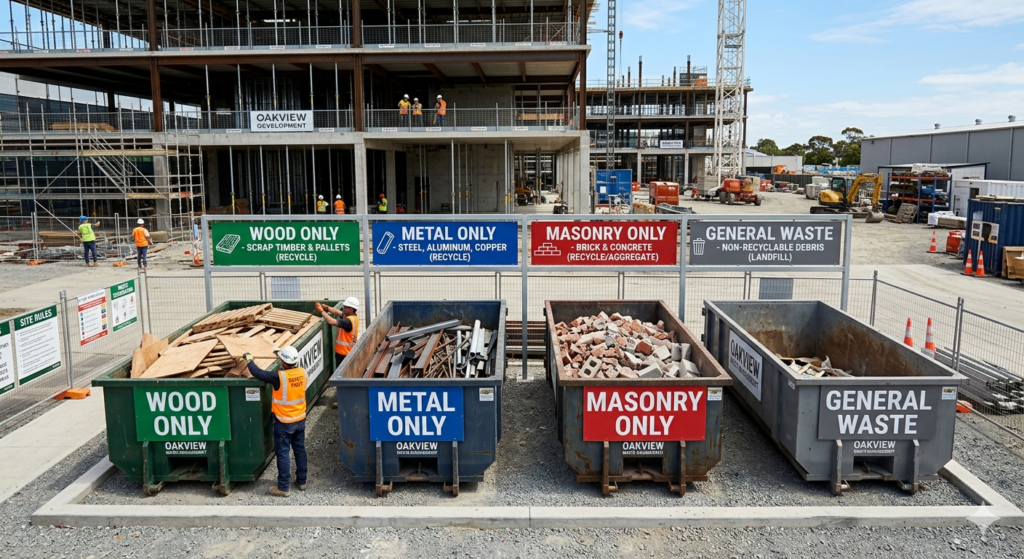
Effective site waste management starts with organization. Instead of sweeping all debris into a single pile, a smart renovator separates materials by type. Timber, masonry, metal, and glass should all have their own designated storage areas on site.
This simple act of sorting changes your perspective. When old joists are neatly stacked rather than thrown in a messy pile, it becomes much easier to visualize their potential as future furniture or architectural accents.
Creative Ways for Reusing Timber
Wood is arguably the most versatile and valuable material you will pull out of an old house. Reusing timber not only saves money but also provides you with dense, old-growth wood that is far superior in quality to modern, fast-grown lumber.
Here are a few practical DIY ideas for salvaged wood:
- Open Shelving: Thick floor joists or roof rafters can be cut to size and mounted on iron brackets to create stunning, heavy-duty shelves for kitchens or living rooms.
- Custom Furniture: Old floorboards can be glued and clamped together to form a beautiful, rustic dining table or entryway bench.
- Accent Walls: Shiplap or thin timber offcuts can be applied to a single wall to create a textured, acoustic-dampening feature wall.
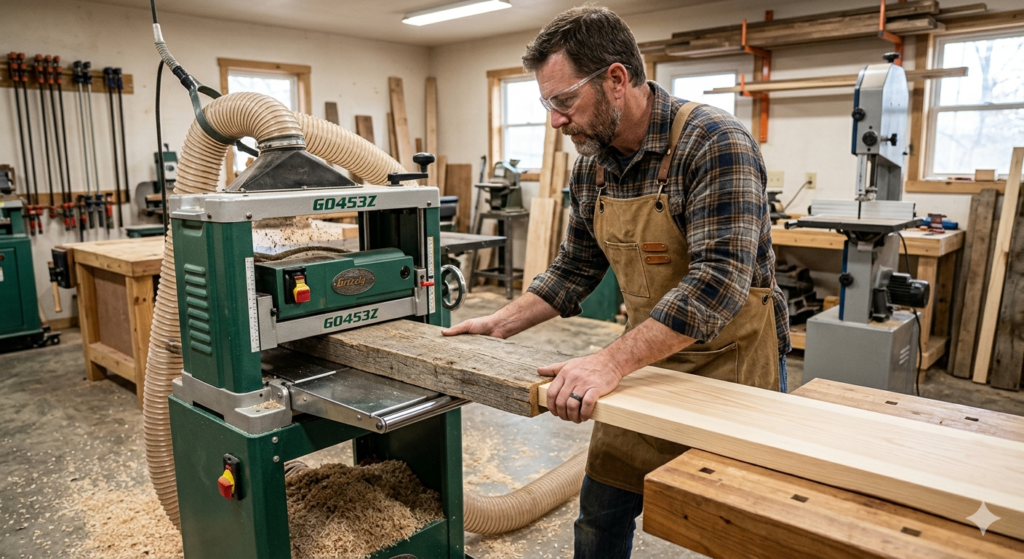
To prepare the wood safely, you must first rigorously check for and remove all nails (a process called denailing). Next, running the boards through a planer (for reclaimed wood) will strip away decades of grime, smooth out dangerous splinters, and reveal the gorgeous, raw grain underneath without losing the wood’s historic character.
The Art of Brick Cleaning and Upcycling
Masonry is heavy, and disposing of it costs a premium in landfill weight fees. Fortunately, upcycling building materials like old bricks can add instant charm to both your interior and exterior spaces.
If your house was built before the 1940s, the bricks were likely laid using lime mortar. This is excellent news for brick cleaning. Lime mortar is softer than the brick itself. Using a specialized masonry hammer or a blunt chisel, you can gently tap the old mortar off the edges of the brick, leaving you with a perfectly reusable building block.
Once cleaned, these bricks can be repurposed into:
- Garden Pathways: Laying broken or half-bricks in a herringbone pattern creates a beautiful, permeable walkway.
- Fire Pits: Clean bricks are perfect for building a sturdy, rustic outdoor fire pit.
- Interior Slips: Whole bricks can be carefully sliced into thin veneers (slips) and applied to an interior wall to create an exposed brick look without taking up valuable floor space.
Upcycling Other Common Building Materials
The potential for creative reuse extends far beyond wood and stone. Almost every component removed during a renovation has a second life if you are willing to look for it.
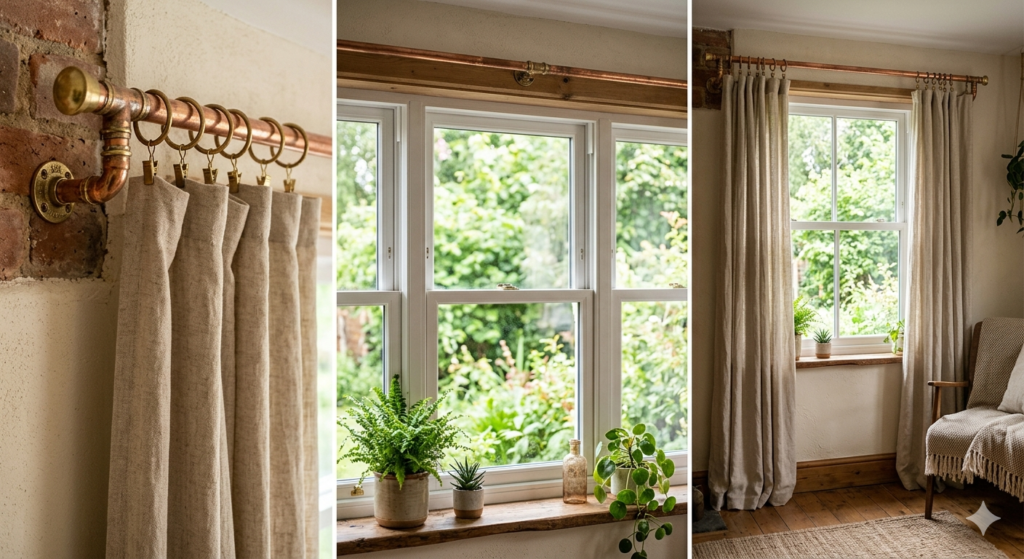
- Copper Piping: Old plumbing pipes can be polished and soldered together to create industrial-style curtain rods, towel racks, or even bespoke lighting fixtures.
- Solid Doors: A heavy, solid wood interior door can be turned sideways and mounted to the wall to serve as a dramatic, oversized headboard for a bed.
- Drywall Offcuts: Clean, untreated drywall (plasterboard) offcuts do not necessarily need to be binned. The gypsum inside is a natural soil amendment and can sometimes be crushed and composted, provided it has no paint or chemical additives.
These creative projects are the hands-on application of the philosophies discussed in our Circular Construction Guide. By keeping these materials in use, you actively participate in a closed-loop economy right in your own backyard.
Conclusion
A successful zero-waste renovation requires a shift in perspective. Repurposing construction waste is not just an environmental obligation; it is a design opportunity. By actively managing your site, mastering the art of brick cleaning, and creatively reusing timber, you can add unparalleled historical depth to your home. Ultimately, upcycling building materials empowers you to save money on disposal fees while crafting a living space that is uniquely yours, proving that one person’s trash is indeed another’s treasure.
Frequently Asked Questions (FAQ)
1. Is it safe to reuse old painted wood?
You must exercise extreme caution with old painted wood, as houses built before 1978 frequently used lead-based paint. Sanding or planing lead-painted wood releases highly toxic dust into the air. Always test old painted surfaces with a lead testing swab before cutting or sanding. If lead is present, the wood should be safely disposed of or encapsulated, not repurposed via sanding.
2. How do I remove cement mortar from old bricks?
Unlike soft lime mortar, modern Portland cement is often harder than the brick itself. Attempting to chip it off will usually shatter the brick. While specialized masonry acids can sometimes dissolve cement, it is highly hazardous and often not worth the effort for a DIYer. It is best to repurpose cement-covered bricks as hard-core rubble for driveway foundations.
3. What is the best way to organize materials on site for reuse?
Effective site waste management requires designating a specific “salvage zone” away from the main foot traffic. Use heavy-duty tarps to protect lumber from the rain, stack bricks neatly on pallets to prevent them from sinking into the mud, and use clearly labeled bins for metal and plastic recycling.
4. Can I reuse old electrical wiring?
No. While you can strip old copper wiring and sell it as scrap metal to a recycling center, you should never reuse old electrical wire for active circuitry in a home renovation. Wiring insulation degrades over time, and older wire may not meet modern safety codes, posing a severe fire risk.