For over a century, the standard method for keeping a house warm has involved setting fire to fossil fuels in the basement. Whether it is a natural gas boiler, an oil furnace, or a propane heater, combustion has been the undisputed king of residential heating. However, as the global focus shifts toward mitigating climate change and securing energy independence, this era is rapidly coming to an end.
The future of housing relies on a fundamental shift in how we power our lives. Upgrading your building’s insulation and sealing its drafts—the “fabric first” approach—is the crucial first step. But once the shell of your house is secured, you must address the active mechanical systems inside. Transitioning away from combustion and embracing modern, clean technology is the ultimate goal of future-proofing your property.
What is Home Decarbonization?
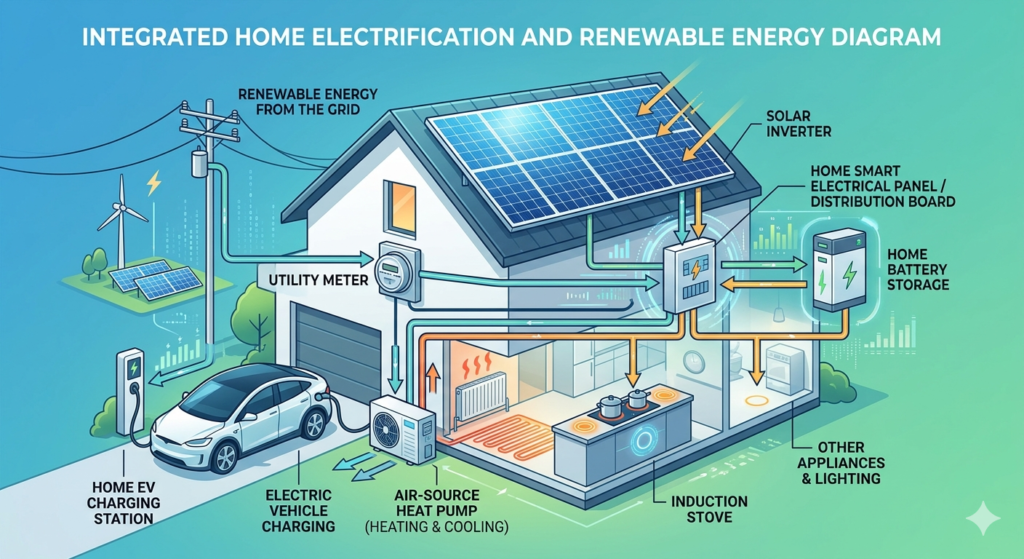
Home decarbonization is the process of eliminating direct greenhouse gas emissions from a residential property by replacing fossil fuel-burning appliances, like gas boilers and oil furnaces, with highly efficient electric alternatives. This transition relies heavily on renewable heating technologies, an upgraded thermal envelope, and grid electrification.
At its core, decarbonization is about removing the combustion process from your living space entirely. By transitioning your heating, hot water, and cooking systems to electricity, you immediately eliminate the carbon monoxide, nitrogen oxides, and carbon dioxide that your home pumps into the local atmosphere every day.
The Push for Electrification: Phasing Out Fossil Fuels
The global movement toward a fossil fuel phase out is not just an environmental ideal; it is becoming a regulatory reality. Many local and national governments are already implementing bans on gas connections in new construction and offering substantial incentives to retrofit existing homes.
This transition is made possible through electrification. Electrification means shifting all residential energy loads onto the electrical grid. While electricity generation used to rely heavily on coal, modern electrical grids are rapidly incorporating wind, solar, and hydroelectric power. Therefore, an all-electric home automatically becomes greener every year as the utility grid cleans up its energy mix.
Heat Pumps: The Core of Low Carbon Heat
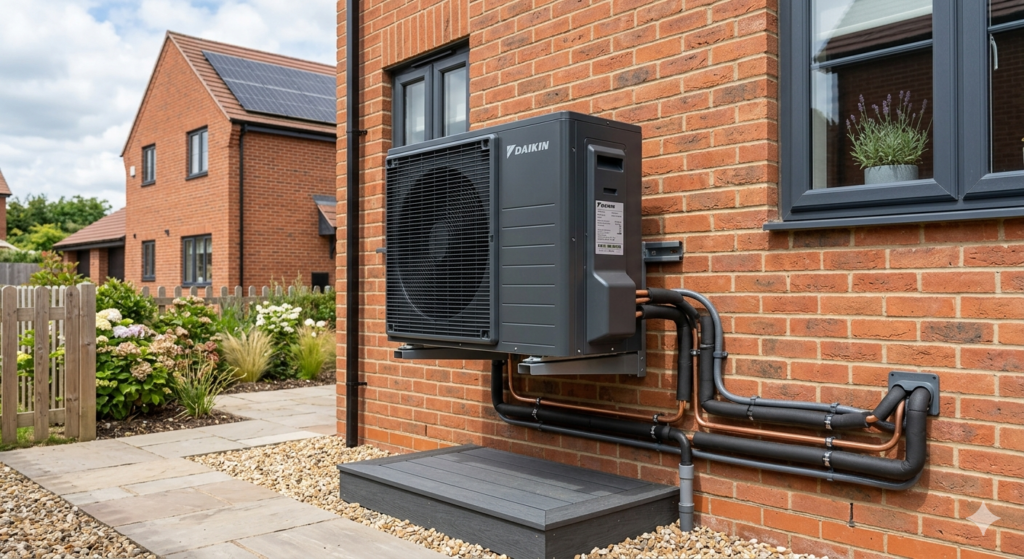
The absolute cornerstone of renewable heating is the heat pump. Unlike a gas boiler that burns fuel to create heat, a heat pump uses a small amount of electricity to move heat from one place to another.
Even in freezing winter weather, there is ambient thermal energy in the outside air or ground. A heat pump absorbs this ambient heat using a specialized refrigerant cycle, compresses it to increase the temperature, and transfers that low carbon heat inside your home.
Because they move heat rather than generate it, heat pumps are incredibly efficient. A modern gas boiler might be 90% to 95% efficient, meaning it turns 95% of its fuel into heat and wastes 5% as exhaust. A heat pump operates at 300% to 400% efficiency. For every 1 unit of electricity it consumes, it delivers 3 to 4 units of heat into your home.
The Crucial Role of Mechanical Ventilation
When you transition to a low-temperature heating system like a heat pump, your home’s thermal envelope must be relatively well-sealed and insulated. However, as discussed in previous guides, you cannot simply seal a house tight without providing fresh air.
This is where Mechanical Ventilation with Heat Recovery (MVHR) becomes essential. An MVHR system constantly extracts stale, humid air from kitchens and bathrooms. Before exhausting this air outside, it passes it through a heat exchanger. The system transfers the warmth from the outgoing stale air into the incoming cold, fresh air.
This means you get a constant supply of filtered, fresh air without losing the valuable heat your heat pump just worked so hard to provide. It is the perfect symbiotic relationship for a decarbonized home.
Maximizing Efficiency with Smart Controls
Gas boilers typically operate in short, high-temperature bursts. You feel cold, the boiler blasts 160°F (70°C) water into the radiators, the house heats up quickly, and the boiler shuts off.
Heat pumps operate entirely differently. They are designed to “low and slow.” They provide a constant, gentle flow of warm water—usually around 95°F to 115°F (35°C to 45°C)—to maintain a perfectly stable indoor temperature 24/7.
To manage this continuous operation efficiently, intelligent system integration is required. Upgrading to a modern smart thermostat allows your heating system to monitor the weather forecast, learn your home’s unique thermal mass, and adjust the heat pump’s output dynamically. This prevents the system from overworking during extreme temperature drops and maximizes your energy savings.
Conclusion
Home decarbonization is the ultimate goal of the modern energy retrofit. By embracing electrification and moving away from combustion, homeowners can drastically reduce their carbon footprint while enjoying unparalleled indoor comfort. While the transition requires careful planning—especially regarding insulation and ventilation—the installation of a high-efficiency heat pump provides reliable, low carbon heat that protects you from volatile fossil fuel markets. By upgrading to these advanced mechanical systems, you are actively preparing your home for the clean energy economy of the future.
Frequently Asked Questions (FAQ)
1. Do heat pumps work in very cold climates?
Yes. Modern “cold-climate” air source heat pumps utilize advanced variable-speed compressors and specialized refrigerants that allow them to extract heat from the outside air even when temperatures drop to -15°F (-26°C) or lower. Ground source (geothermal) heat pumps are even more resilient to extreme cold, as underground temperatures remain constantly mild year-round.
2. Can I install a heat pump without fully insulating my house?
While you technically can, it is highly unadvisable. An uninsulated, drafty house loses heat rapidly. To compensate, you would need to install a massive, very expensive heat pump. If you ever insulate the house later, that large heat pump will be drastically oversized, leading to inefficiency and premature wear. Always insulate first.
3. Do I need to replace my existing radiators to use a heat pump?
Often, yes. Because heat pumps deliver water at lower temperatures than gas boilers, the surface area of the heat emitter usually needs to be larger to warm the room effectively. This frequently means installing larger, double-panel radiators or upgrading to water-based underfloor heating, which pairs perfectly with heat pumps.
4. Will my electricity bills skyrocket if I switch to a heat pump?
Your electricity usage will increase because you are shifting your heating load to the electrical grid. However, because heat pumps are 300-400% efficient, and because you will no longer have a gas or oil bill, your total combined utility costs typically decrease or remain comparable, depending on local utility rates.