When upgrading a home’s thermal performance, the immediate instinct is often to reach for the cheapest, most readily available materials. For decades, this has meant using fiberglass batts or petroleum-based spray foams. However, as homeowners become more aware of indoor air quality and the climate impact of construction, a shift is occurring.
Standard insulation materials often carry a heavy environmental toll. They require massive amounts of energy to manufacture and can off-gas volatile organic compounds (VOCs) into your living space for years. Fortunately, there is a better way. By utilizing natural, bio-based alternatives, you can achieve excellent thermal performance without compromising your health or the planet.
What Are Eco-Friendly Insulation Types?
What are eco friendly insulation types? Eco-friendly insulation types are building materials made from natural, renewable, or recycled resources that require minimal energy to manufacture. These materials, such as hemp, sheep’s wool, cork, and cellulose, provide high thermal resistance while remaining non-toxic, biodegradable, and safe for indoor air quality.
The move toward sustainable building materials is fundamentally changing how we approach retrofits. Unlike plastic foams that trap moisture and persist in landfills for centuries, natural insulations work in harmony with the environment. They often act as carbon sinks, meaning they absorb more carbon dioxide during their growth phase than is emitted during their production.
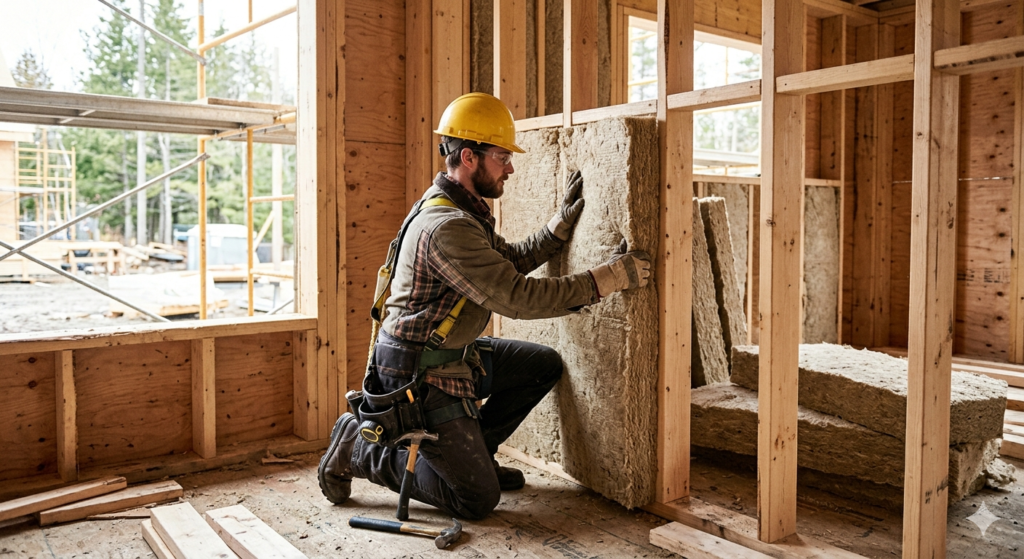
Furthermore, these materials are exceptionally safe to handle. Installers do not need to wear hazardous material suits to protect themselves from microscopic glass shards or toxic chemical reactions.
Top Natural Insulation Materials Compared
Understanding the specific properties of each natural material helps you choose the right product for your specific application. Here is a comparison of the most effective options on the market.
Hemp Insulation
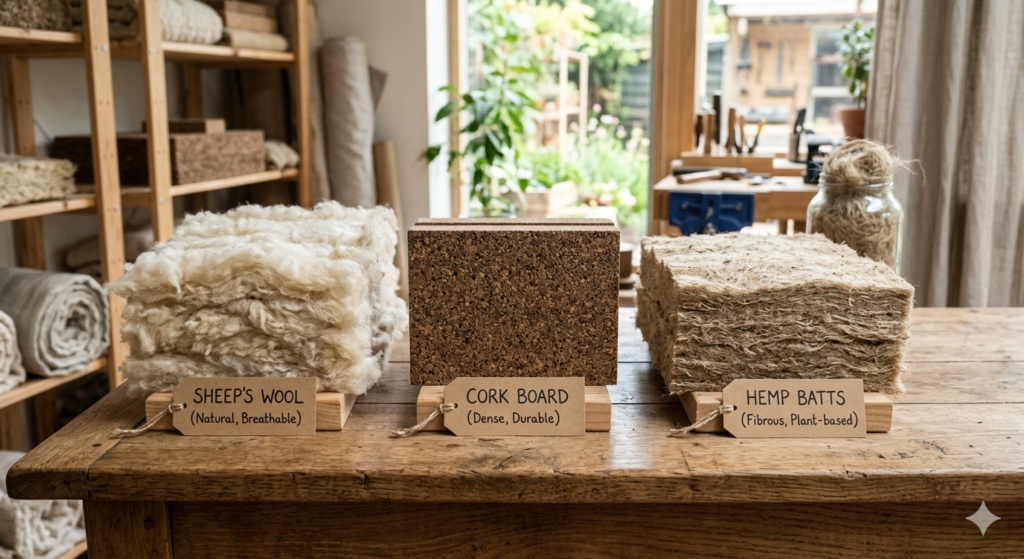
Hemp is an incredibly fast-growing crop that requires very little water and zero pesticides. When processed into insulation batts, it forms a dense, highly effective thermal barrier. Hemp is naturally resistant to pests and mold. It also has excellent acoustic dampening properties, making it ideal for internal partition walls and floors.
Sheep’s Wool Insulation
Wool has been used to keep mammals warm in extreme weather for millennia, and it performs exactly the same function in a building. It is naturally flame retardant and highly hygroscopic, meaning it can absorb and release moisture without losing its insulating value. Wool also uniquely absorbs harmful VOCs from the air, actively purifying your indoor environment. Utilizing sheep’s wool insulation rolls in your attic or walls is a highly effective way to manage both temperature and humidity safely.
Cork Insulation
Harvested from the bark of the cork oak tree without harming the tree itself, cork is a rapidly renewable resource. It is usually baked in molds, where its natural resins bind it into rigid boards. Cork is impervious to water, resistant to rot, and handles heavy compressive loads well. This makes it an excellent choice for external wall insulation or underfloor applications.
Cellulose Insulation
Cellulose insulation is made from up to 85% recycled newspaper, which is milled into a fine, fluffy fiber. It is heavily treated with natural borate salts to make it highly resistant to fire, mold, and insects. Cellulose is typically blown into empty wall cavities or spread across attic floors, making it one of the most cost-effective eco-friendly options available.
The Health Benefits of Non-Toxic Insulation
One of the most compelling reasons to choose natural insulation is the immediate impact on human health. Traditional spray foams rely on complex chemical reactions on-site, which can leave lingering odors and chemical residues if mixed incorrectly. Fiberglass can shed microscopic particles that irritate the skin, eyes, and respiratory system.
By opting for non-toxic insulation, you completely eliminate these risks. Materials like wool and hemp do not off-gas harmful chemicals. In fact, they contribute to a healthier indoor environment by maintaining a stable, breathable atmosphere. When combined with the rigorous air-sealing techniques detailed in our Thermal Envelope Masterclass, these natural materials create a perfectly balanced indoor climate.
Breathability and Moisture Management
Older homes built before the 1940s were designed to be “breathable.” Their solid brick or stone walls constantly absorb rain and dry out via the wind. If you apply closed-cell plastic foam to these structures, you trap that moisture inside the walls, which inevitably leads to structural rot.
Natural materials excel at moisture management. They are vapor-permeable (breathable). If water vapor enters a wall cavity filled with sheep’s wool or wood fiber, the material safely diffuses the moisture back out without suffering any degradation. This makes eco-friendly options the reliable structural choice for heritage retrofits and historic building restorations.
Conclusion
Choosing the right thermal barrier is about more than just maximizing R-value; it is about considering the lifecycle of the building and the health of its occupants. By exploring various eco friendly insulation types, homeowners can make responsible, scientifically sound decisions. Whether you choose the moisture-managing brilliance of wool, the structural rigidity of cork, or the cost-effective recycling of cellulose, sustainable building materials offer a superior, future-proof approach to whole-house energy efficiency.
Frequently Asked Questions (FAQ)
1. Are natural insulation materials a fire hazard?
No, natural insulations are safe and may meet strict building fire codes. Materials like sheep’s wool are naturally flame retardant and can extinguish themselves when the heat source is removed. Other materials, like hemp and cellulose, are treated with natural, non-toxic mineral salts (like borates) to make them fire-resistant.
2. Do eco-friendly insulations attract pests or rodents?
Natural insulations are specifically treated to deter pests. The borate treatments used in cellulose and hemp are toxic to insects and highly irritating to rodents, discouraging them from nesting. Wool is often treated with safe, specialized compounds to prevent moth infestations.
3. Is natural insulation more expensive than fiberglass or foam?
The upfront material cost of natural insulation is generally higher than budget fiberglass batts. However, when you factor in the lack of required safety equipment, the ease of installation, the moisture management benefits (which prevent costly rot repairs), and the extended lifespan of the materials, the long-term value is highly competitive.
4. Do eco-friendly insulations have the same R-value as plastic foams?
Inch for inch, rigid plastic foams (like PIR or polyurethane) typically offer a slightly higher R-value (thermal resistance) than natural materials. This means you may need to install a slightly thicker layer of hemp, wool, or wood fiber to achieve the exact same level of heat retention as a thinner plastic board.