Victorian houses are renowned for their stunning architectural details. With their high ceilings, ornate cornices, original fireplaces, and classic brick facades, they represent a highly desirable segment of the housing market in the UK, the US, and beyond. However, living in one during the dead of winter is often a test of endurance.
Built during an era when coal was cheap and open fires burned in every room, these structures were never designed to hold in heat. Today, modern homeowners want to upgrade their thermal performance to lower energy bills and reduce carbon emissions. Yet, applying modern plastic insulations and airtight cement to these historic buildings frequently results in disastrous structural rot. Upgrading these properties requires a careful, scientifically sound approach that respects the original architecture.
What Does It Mean to Retrofit a Victorian Home?
How to retrofit a Victorian house safely? To retrofit a Victorian house, you must upgrade its thermal performance while preserving its historic breathability. This involves insulating solid brick walls with vapor-permeable materials, sealing suspended timber floors, and meticulously draught-proofing original sash windows to lower energy bills without causing structural rot.
A Victorian home relies on a delicate balance of moisture management. The solid masonry absorbs rain, and the constant drafts evaporate it away. When you begin to seal those drafts to save energy, you disrupt that balance.
Therefore, retrofitting a Victorian property is not about turning it into a hermetically sealed modern box. It is about applying the right “fabric first” upgrades that slow down heat loss while allowing the building to safely manage water vapor.
Tackling the Envelope: Victorian Terrace Insulation
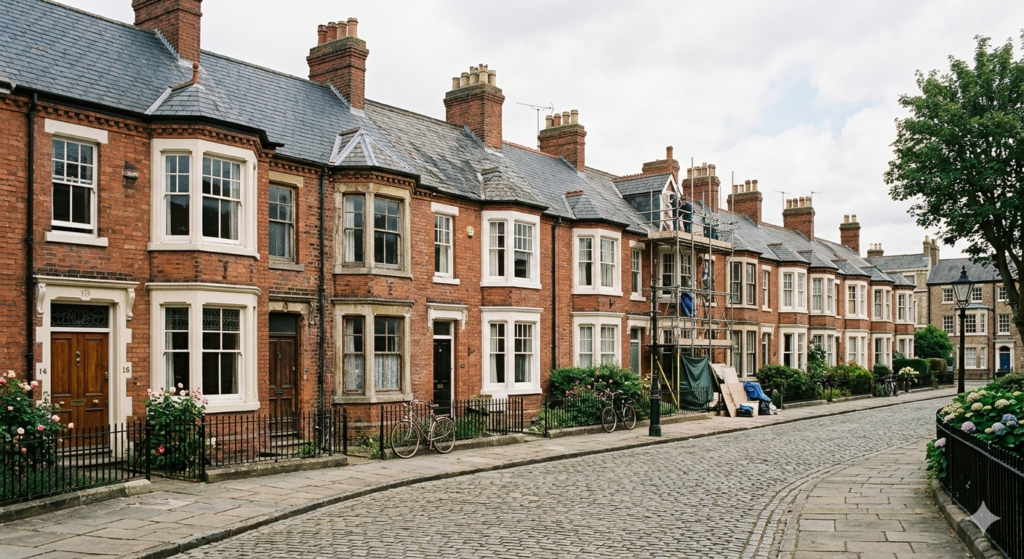
The largest source of heat loss in these homes is the uninsulated brickwork. Victorian terrace insulation is particularly challenging because the front facade is the defining characteristic of the property.
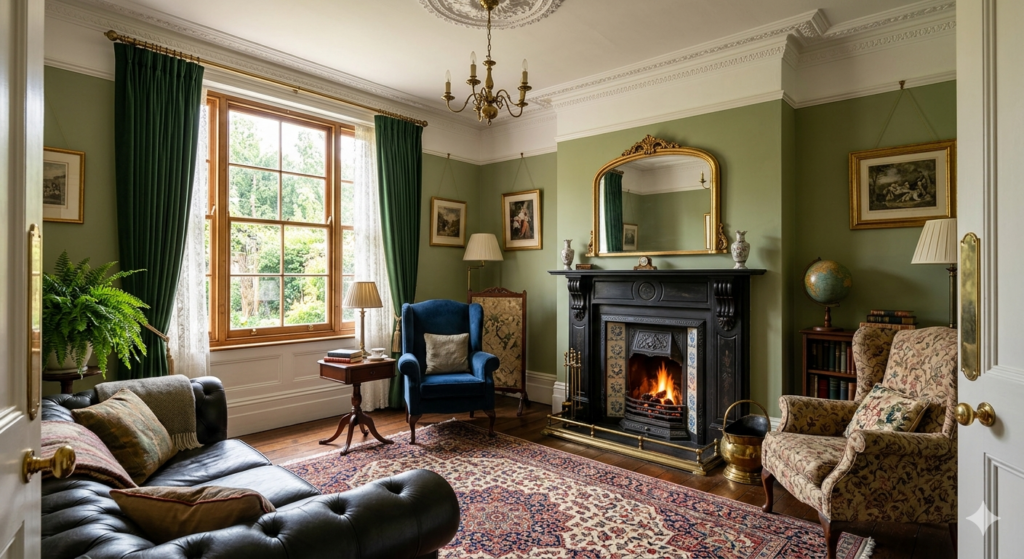
Applying external wall insulation (EWI) to the front of a classic terrace destroys its aesthetic value and is frequently banned by local planning authorities. Consequently, homeowners must insulate the front walls internally. This involves applying breathable materials, such as wood fiber boards and lime plaster, directly to the inside of the brickwork.
For the rear of the property—which is often rendered or visually less significant—external wall insulation is sometimes permissible and highly effective. Wrapping the back and sides of the house in a continuous layer of insulation eliminates thermal bridges and protects the old masonry from driving rain.
The Loft and Roof
The easiest and most cost-effective upgrade in any Victorian home is loft insulation. Because warm air rises, adding 300mm (12 inches) of natural, breathable insulation (like sheep’s wool or cellulose) across the attic floor yields immediate energy savings without altering the historic living spaces below.
Solving the Cold Feet: Suspended Timber Floor Insulation
A major complaint in older homes is freezing cold feet and icy drafts sweeping across the living room carpet. This is due to the ground floor structure. Most Victorian homes feature a suspended timber floor built over a shallow, ventilated dirt crawlspace.
Outside, you will see small cast-iron “air bricks” near the ground. These vents allow cross-breezes to keep the timber joists dry. A common mistake is blocking these air bricks to stop drafts, which inevitably leads to severe dry rot and structural collapse.
The correct method for suspended timber floor insulation involves lifting the original floorboards. A breathable wind-tight membrane is draped over the joists to stop the drafts, and the gaps between the joists are packed with a breathable insulation material. The boards are then re-laid, leaving the ventilated void underneath completely unobstructed.
Preserving the Facade: Sash Window Draught Proofing
Original timber sliding sash windows are the eyes of a Victorian house. Unfortunately, their design—featuring counterweights hidden inside hollow wooden boxes—acts as a natural wind tunnel.
Ripping out original timber sashes and replacing them with white plastic uPVC frames drastically devalues the property and ruins its historical integrity. A far superior approach is restoration and sash window draught proofing.
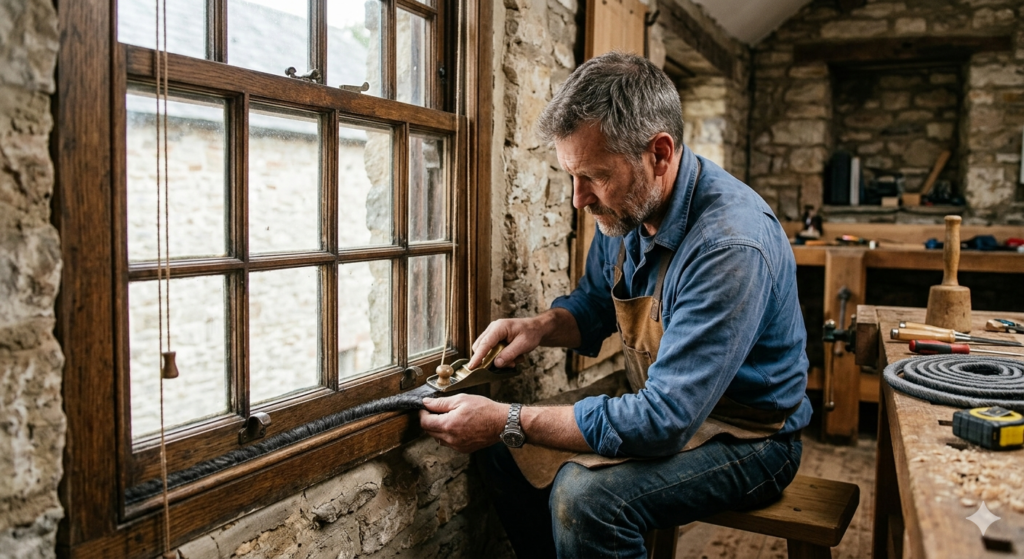
Specialist carpenters can dismantle the window, route small grooves into the timber frames, and install hidden brush seals. Incorporating a high-quality draught proofing strips for sash windows inside the staff beads and parting beads stops the rattling, eliminates drafts, and drastically reduces street noise. Paired with secondary glazing, a restored sash window can perform almost as well as a modern double-glazed unit.
Ventilation and Moisture Management
Once you have insulated the floors, walls, and windows, your Victorian house will be significantly more airtight. This is excellent for heat retention, but it introduces a new risk: trapped humidity.
As detailed in our broader guide on[Internal Link: “Retrofitting Old Houses”], breathability in materials does not negate the need for active ventilation. Moisture from cooking and bathing can no longer escape through the drafty floorboards or rattling windows.
To prevent condensation and black mold from forming on the cold spots of your newly sealed home, you must install continuous mechanical extraction in the kitchens and bathrooms. Balancing your new airtightness with controlled ventilation ensures the historic fabric of the building remains dry and structurally sound.
Conclusion
Bringing a 19th-century home up to 21st-century thermal standards is entirely possible, provided you respect the building’s original design. Learning how to retrofit a Victorian house is an exercise in building physics and architectural preservation. By utilizing breathable Victorian terrace insulation, correctly detailing your suspended timber floor insulation, and investing in professional sash window draught proofing, you can create a warm, low-carbon home. This careful, sympathetic approach guarantees that the historic elegance of your property will be preserved for future generations to enjoy.
Frequently Asked Questions (FAQ)
1. Should I block the air bricks on the outside of my Victorian house?
Never block the external air bricks located near the ground. These are essential for ventilating the void beneath your suspended timber floors. Blocking them traps damp air underneath the house, which quickly leads to dry rot, wet rot, and the eventual collapse of your wooden floor joists.
2. Can I use standard fiberglass insulation under my Victorian floorboards?
It is generally not recommended. Standard fiberglass batts can sag over time and do not manage moisture well in damp crawlspaces. Using a rigid, breathable material like wood fiber, or a hygroscopic material like sheep’s wool supported by breathable netting, is much safer for the historic timber.
3. Are modern uPVC windows a good idea for Victorian houses?
From a heritage and aesthetic standpoint, uPVC windows are highly discouraged. They alter the visual proportions of the house and lack the slender profiles of original timber frames. Furthermore, timber is a natural, repairable material that can last centuries, whereas a failed uPVC unit is unrepairable and ends up in a landfill.
4. Will insulating my Victorian walls make my rooms significantly smaller?
Internal solid wall insulation does reduce the footprint of the room. Depending on the target U-value and the materials used, you can expect to lose between 50mm and 100mm (2 to 4 inches) of space along each external wall. Original skirting boards and cornices will need to be carefully removed and reinstated over the new insulation layer.