Pre-1940s houses built with solid brick or stone possess undeniable historic charm. However, without a cavity between the inner and outer layers of masonry, these solid walls act as massive thermal bridges. They constantly bleed costly heat into the winter air and leave interior rooms feeling damp and drafty.
For many homeowners, adding insulation to the inside face of the wall seems like the most practical and aesthetically pleasing solution. Yet, learning exactly how to insulate brick walls internal safely is a complex matter of building physics. Applying modern, non-breathable materials to historic masonry is a fast track to structural rot and severe mold. To upgrade an old home responsibly, you must work with the physics of the original structure, not against it.
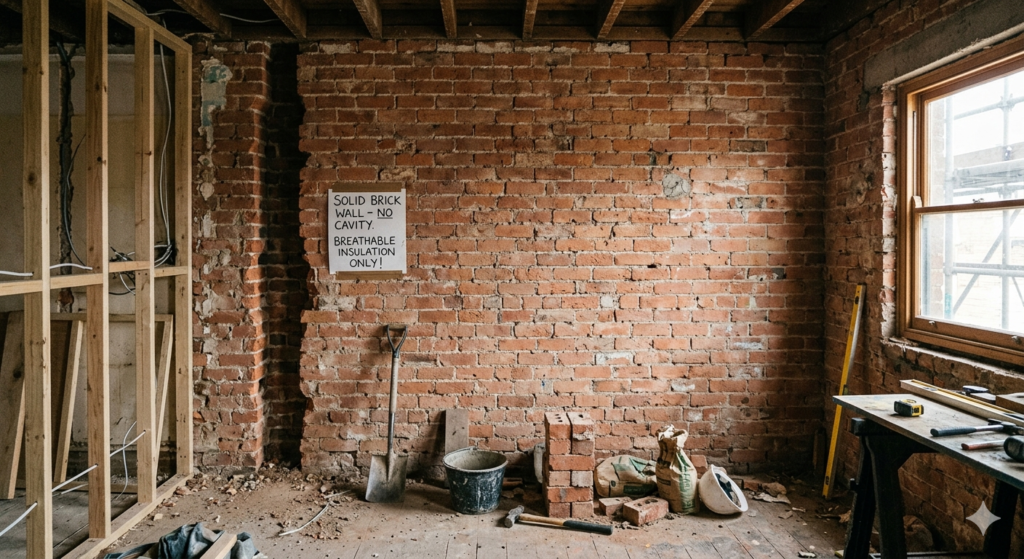
The Danger of Insulating Solid Brick
How to insulate brick walls internal safely? To insulate brick walls internally, you must use breathable, vapor-permeable materials like wood fiber or calcium silicate. These materials allow moisture to naturally enter and escape the masonry, preventing trapped dampness and structural rot associated with standard closed-cell plastic or foam insulations.
Traditional solid walls were designed to get wet and dry out. When it rains, the brick and mortar absorb moisture. When the sun comes out, the wind and heat from inside the house evaporate that moisture away. This process is often referred to as “breathability.”
If you stick rigid plastic foam boards (like PIR or polyurethane) to the inside of a solid brick wall, you cut off the internal heat that historically helped dry the bricks. You also create an impermeable barrier. Any moisture that enters the brick from the outside rain—or any indoor humidity that finds a tiny crack—gets trapped behind the plastic.
Understanding Interstitial Condensation
When moisture is trapped inside the layers of a wall assembly, it leads to a catastrophic failure known as interstitial condensation.
In a poorly insulated solid wall, warm, moisture-laden indoor air migrates through the plaster. If it hits the cold, uninsulated brick behind a layer of plastic foam, it immediately turns into liquid water. Because the plastic prevents the wall from drying inward, this hidden water accumulates over time.
The focus of any heritage retrofit must be preventing interstitial condensation. If left unchecked, this hidden moisture rots embedded timber floor joists, degrades the mortar, and provides a breeding ground for toxic black mold that eventually bleeds through the interior finishes.
Why You Need Vapor Permeable Insulation
The solution to insulating solid walls is using vapor permeable insulation. Unlike plastic foams that block moisture entirely, vapor-permeable materials manage moisture safely.
These materials are “hygroscopic,” meaning they can absorb, hold, and release water vapor without losing their insulating properties or suffering structural damage. When the wall gets damp, the insulation safely diffuses the moisture back into the room to be extracted by your ventilation system.
The most common and effective materials for solid wall insulation include:
- Wood Fiber Insulation: The industry gold standard for heritage retrofits. It is highly breathable, dense enough to provide acoustic insulation, and stores carbon.
- Cork Boards: A natural, highly durable, and moisture-resistant material.
- Calcium Silicate Boards: Extremely porous boards that actively draw moisture out of the wall structure via capillary action.
Step-by-Step: The Breathable Insulation Process
Retrofitting a solid wall requires a specific sequence of materials to ensure the assembly remains dry and airtight.
- Preparation: Strip the interior wall back to the bare brick. You must remove any modern, non-breathable gypsum plasters or cement-based renders, as these will trap moisture behind your new insulation.
- The Parge Coat: Apply a continuous 10mm layer of breathable lime plaster directly to the bare brick. This fills the cracks and creates a crucial airtight layer, which is a fundamental principle of our Thermal Envelope Masterclass.
- Fixing the Insulation: Apply the wood fiber insulation boards directly to the wet parge coat to ensure there are no air gaps behind the boards. Mechanical fixings are also required. Testing the system with wood fiber insulation samples is a smart way to ensure you are using thermally broken, plastic-stemmed anchors rather than standard steel screws, which can rust and create thermal bridges.
- Finishing: Cover the insulation boards with a breathable lime or clay plaster. Finally, paint the wall exclusively with moisture-open mineral or clay-based paints. Standard latex or acrylic paints act like a plastic bag and will ruin the breathability of the entire system.
Assessing Your Walls Before You Start
Not every solid brick wall is a candidate for internal insulation. Before starting any work, you must assess the exterior condition of the building.
If your brickwork has crumbling mortar (pointing), cracked bricks, or is battered by severe driving rain, you cannot insulate it internally. Water will penetrate the brickwork faster than the breathable insulation can dry it out. You must repair all external defects, fix leaky gutters, and ensure the masonry is relatively dry before attempting to insulate the inside.
Conclusion
Upgrading the thermal performance of an old, solid masonry home is a delicate balance of preserving history and improving modern comfort. Understanding how to insulate brick walls internal requires abandoning the modern reliance on cheap, impermeable plastics in favor of natural, hygroscopic building materials. By utilizing breathable wood fiber insulation and lime-based plasters, you can drastically reduce your heating bills, improve your indoor air quality, and ensure the structural integrity of your home remains intact for another century.
Frequently Asked Questions (FAQ)
1. How much space will I lose by insulating my solid walls internally?
You will typically lose between 50mm and 100mm (2 to 4 inches) of floor space along every external wall. Because breathable materials like wood fiber have a slightly lower thermal resistance than rigid plastic foams, you often need a thicker layer to achieve the same U-value (insulation rating).
2. Can I use insulated plasterboard on solid brick walls?
Standard insulated plasterboard (which is gypsum board bonded to PIR foam) should generally be avoided on solid, pre-1940s masonry. It is vapor-impermeable and carries a high risk of causing interstitial condensation and rotting the underlying wall structure.
3. Do I need a vapor barrier with wood fiber insulation?
No, you do not use a traditional plastic vapor barrier with wood fiber on solid walls. You may use a “smart” vapor control layer (which adapts its permeability based on humidity), but the system relies on remaining vapor-open. Adding a plastic sheet defeats the purpose of using breathable materials.
4. Is external wall insulation better than internal for solid walls?
From a purely building physics standpoint, external wall insulation (EWI) is safer and more effective. It wraps the entire building in a warm blanket, eliminating thermal bridges and protecting the brickwork from rain. However, EWI is often impossible on historic homes due to planning permissions, conservation rules, or the desire to preserve the historic brick facade.