You have upgraded your boiler, installed double-glazed windows, and rolled thick fiberglass insulation across your attic floor. Yet, when the winter winds howl, certain rooms in your home still feel inexplicably chilly. If you are constantly asking yourself, “Why is my house cold?”, the answer likely lies in invisible flaws within your building’s architecture.
Even the thickest insulation cannot keep a house warm if there are “fast lanes” allowing heat to bypass the thermal barrier entirely. These weak points in your home’s defense system drain your energy budget, create uncomfortable drafts, and can even lead to severe moisture damage over time. To truly master your home’s comfort, you must learn to diagnose and eliminate these hidden leaks.
What is a Thermal Bridge?
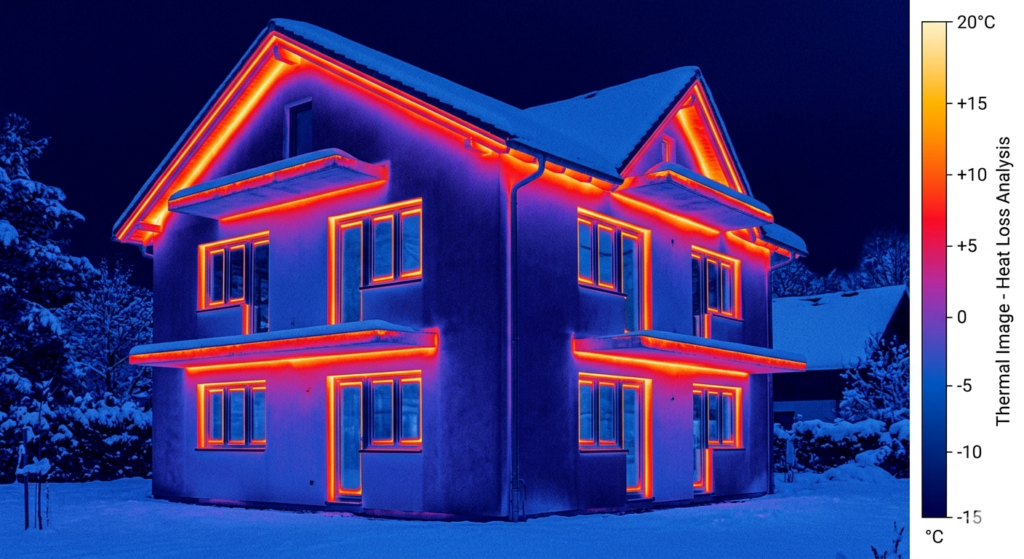
A thermal bridge is an area in a building’s envelope where heat transfers much faster than through the surrounding materials. This occurs when a highly conductive material, like steel or solid concrete, bypasses the insulation layer, creating a direct path for indoor heat to escape outside.
Think of your home’s insulation like a thick winter coat. If you wear a heavy down jacket but leave the zipper wide open, the cold will still get in. A thermal bridge is essentially an unzipped section of your home’s thermal coat.
Understanding these heat loss mechanisms is critical because heat always follows the path of least resistance. If 95% of your wall is highly insulated but 5% consists of highly conductive solid framing that connects the inside to the outside, a disproportionate amount of your expensive heating will bleed right through that 5%.
How to Identify Cold Spots on Walls
Because thermal bridges are usually hidden behind drywall and plaster, they are nearly impossible to see with the naked eye. However, they leave physical clues behind.
The most common symptom is unexplained cold spots on walls, particularly in corners, around windows, or where the wall meets the ceiling. Because the heat is escaping rapidly through these areas, the interior surface temperature drops significantly. In cold weather, warm indoor air hits these localized cold patches and condenses, frequently resulting in circular patches of black mold or peeling wallpaper.
To confirm the presence of a thermal bridge without tearing down your drywall, you need to measure the surface temperatures directly. Using a laser thermometer gun allows you to scan your walls from across the room. If the bulk of your wall reads 68°F (20°C), but a specific vertical line or corner suddenly drops to 55°F (12°C), you have successfully diagnosed a thermal bridge.
Typical Thermal Bridging Details to Check
When hunting for insulation gaps and thermal bridges, certain architectural features are notorious culprits. Knowing where to look is half the battle.
Concrete Balconies and Cantilevers
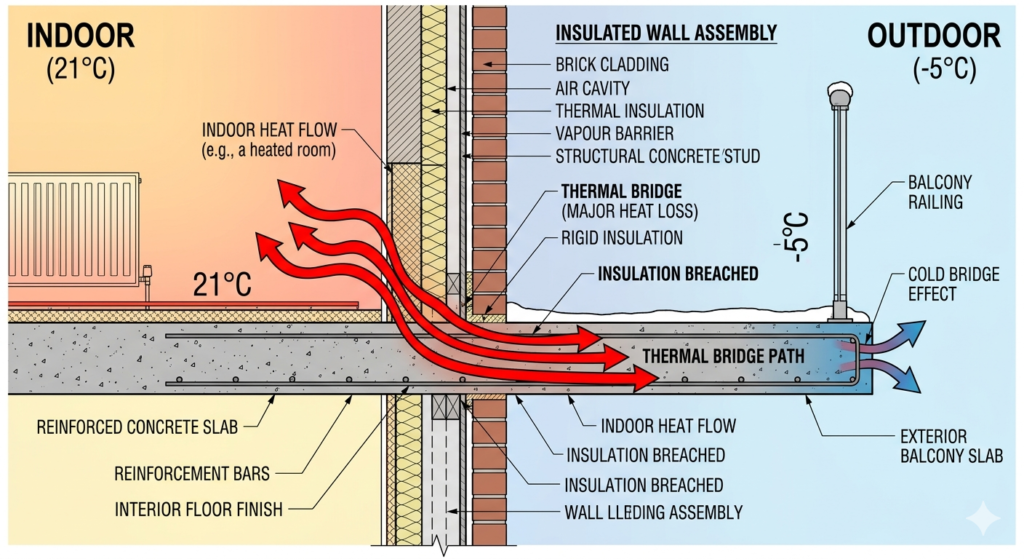
A solid concrete balcony slab that extends from the interior floor structure out into the exterior air is one of the worst offenders. It acts like a giant cooling fin, aggressively sucking heat out of your living room and radiating it into the winter sky.
Window and Door Frames
Even if you buy highly efficient glass, the installation determines its overall performance. If the gap between the window frame and the rough wall opening is simply covered with trim rather than meticulously insulated and sealed, heat will easily flank the window unit.
Wall-to-Roof Junctions
The corner where the exterior wall meets the roof is historically difficult to insulate perfectly. If the attic insulation does not physically touch the top of the wall insulation, the resulting gap allows continuous heat loss along the entire perimeter of the home.
Wood and Steel Studs
In standard timber or steel-framed homes, the studs themselves act as thermal bridges. While wood is a better insulator than steel, it still conducts heat much faster than the fluffy insulation sitting between the studs.
Strategies for Fixing Thermal Bridges in Buildings
Fixing thermal bridges in buildings requires intercepting the conductive pathway. The most effective way to eliminate framing bridges (like wood or steel studs) is to apply a continuous layer of rigid insulation directly to the exterior of the house. This wraps the entire structure in a seamless thermal blanket, disconnecting the structural frame from the outside cold.
For specific thermal bridging details like concrete balconies or steel beams, builders use specialized “thermal breaks.” These are heavy-duty, load-bearing insulation blocks inserted into the structure during construction or major renovations to separate the exterior section from the interior section.
If external insulation is not possible, targeted internal retrofits—such as applying specialized aerogel strips to cold window reveals or thoroughly injecting foam into junction gaps—can mitigate the damage. Ultimately, addressing these weak points is a core component of the Thermal Envelope Masterclass, ensuring that your insulation actually performs as advertised.
Conclusion
A cold, drafty home is rarely the result of a single catastrophic failure, but rather the sum of dozens of tiny, invisible leaks. By understanding how heat moves through conductive materials, you can stop guessing and start diagnosing. Fixing thermal bridges in buildings is not just about saving money on your utility bills; it is about protecting your home from structural rot and creating an indoor environment that is healthy, dry, and uniformly comfortable all year round.
Frequently Asked Questions (FAQ)
1. Do thermal bridges cause mold?
Yes, they are a primary cause of localized indoor mold. Because a thermal bridge creates a highly localized cold spot on an otherwise warm interior wall, indoor humidity naturally condenses on that specific spot. Over time, this constant dampness feeds mold growth, typically in corners or around windows.
2. Can I fix a thermal bridge with just caulking or expanding foam?
Caulking and spray foam are excellent for stopping air leaks (drafts), but they are not always sufficient to stop a solid thermal bridge (like a concrete slab or steel beam). Stopping a true thermal bridge usually requires inserting a physical layer of continuous insulation to break the conductive pathway.
3. Are thermal bridges only a problem in winter?
No. While they are most noticeable in winter because they cause cold spots and heat loss, they also work in reverse during the summer. A thermal bridge will draw unwanted extreme outdoor heat straight into your air-conditioned living space, forcing your cooling system to work harder.
4. Is it expensive to fix thermal bridges?
It depends on the stage of the project. If you are already undertaking a deep retrofit or replacing siding, fixing thermal bridges by adding continuous exterior insulation is highly cost-effective. However, trying to retrofit a thermal break into an existing, finished concrete balcony can be structurally difficult and very expensive.