Rising utility bills and uncomfortable, drafty rooms are a constant source of frustration for many homeowners. When you start researching how to fix these problems, you are often met with advice to gut your house, install a new heating system, and wrap the exterior in thick insulation. While these deep retrofits are the ultimate solution, they require massive budgets and months of planning.
Fortunately, lowering your carbon footprint and saving money does not have to be an all-or-nothing endeavor. There is a vast spectrum of upgrades you can make right now. By breaking down the best strategies into immediate, low-cost actions and strategic, high-cost investments, you can start building a warmer, more affordable home today, regardless of your current budget.
What Does It Mean to Improve Home Energy Efficiency?
What are the best improve home energy efficiency ideas? The best improve home energy efficiency ideas range from low-cost quick wins like sealing drafts and upgrading to LED bulbs, to high-cost investments like installing heat pumps and comprehensive insulation, all designed to reduce overall energy consumption.
Energy efficiency is simply the act of using less energy to perform the same task. In a residential setting, this means keeping your living room at a comfortable 68°F (20°C) while forcing your boiler to work half as hard.
Homeowners must realize that efficiency is a journey, not a single purchase. While high-cost architectural interventions fundamentally change the building physics, low-cost behavioral changes and minor DIY upgrades can trim 10% to 20% off your bills almost immediately.
Low-Cost Ideas: Quick Wins for Energy Saving
If you have a weekend and a trip to the local hardware store ahead of you, these quick wins energy saving strategies offer the fastest return on investment.
1. Upgrade Your Lighting
Replacing old incandescent or halogen bulbs is the easiest efficiency upgrade possible. LED technology uses up to 75% less energy and lasts exponentially longer. Swapping out the most heavily used lights in your kitchen and living room using high-quality LED bulbs will noticeably impact your next electricity bill.
2. Install Radiator Reflectors
If your radiators are mounted on uninsulated external walls, up to 50% of the heat they produce is absorbed directly into the cold brickwork and lost outside. Sliding thin, foil-backed radiator reflectors directly behind the unit bounces that thermal energy back into the room. This simple DIY fix allows the room to heat up faster and stay warm longer.
3. Eliminate Drafts (Weatherstripping)
Uncontrolled drafts are the enemy of efficiency. Buy cheap foam weatherstripping tape and apply it to the inside frames of your doors and windows. Add a heavy draft excluder (a “door snake”) to the bottom of your front door to stop cold air from sweeping across your floors.
Mid-Range Ideas: DIY Insulation and Smart Tech
If you have a slightly larger budget (a few hundred dollars) and some basic DIY skills, you can tackle mid-range upgrades that yield significant, permanent savings.
1. Loft and Attic DIY Insulation
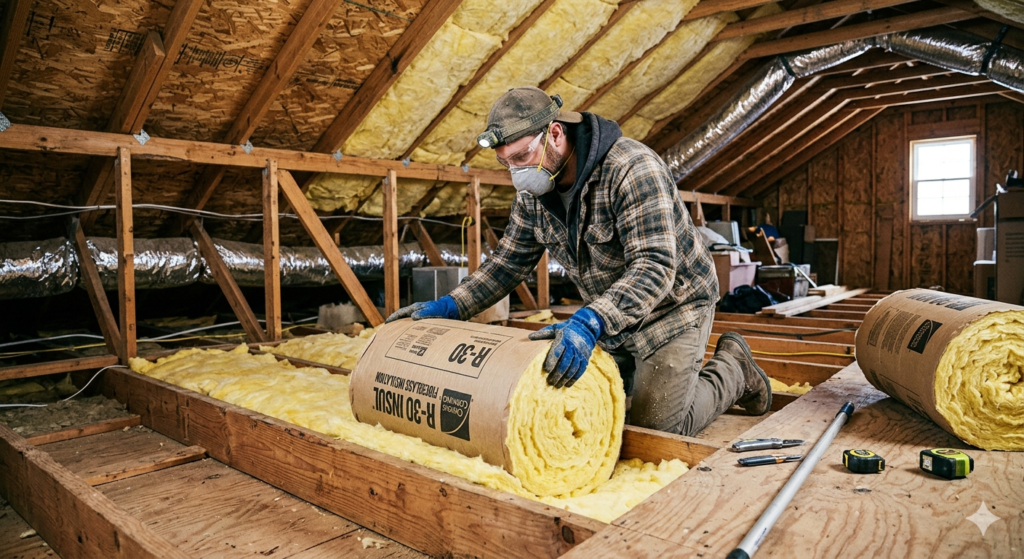
Heat rises, meaning a poorly insulated attic acts like a massive chimney, sucking the warmth straight out of your home. Rolling out thick layers of diy insulation—such as mineral wool or sheep’s wool—between your attic floor joists is a weekend project that requires no specialized tools. Going from zero insulation to the recommended 270mm (11 inches) can cut heating bills dramatically.
2. Implement Smart Home Upgrades
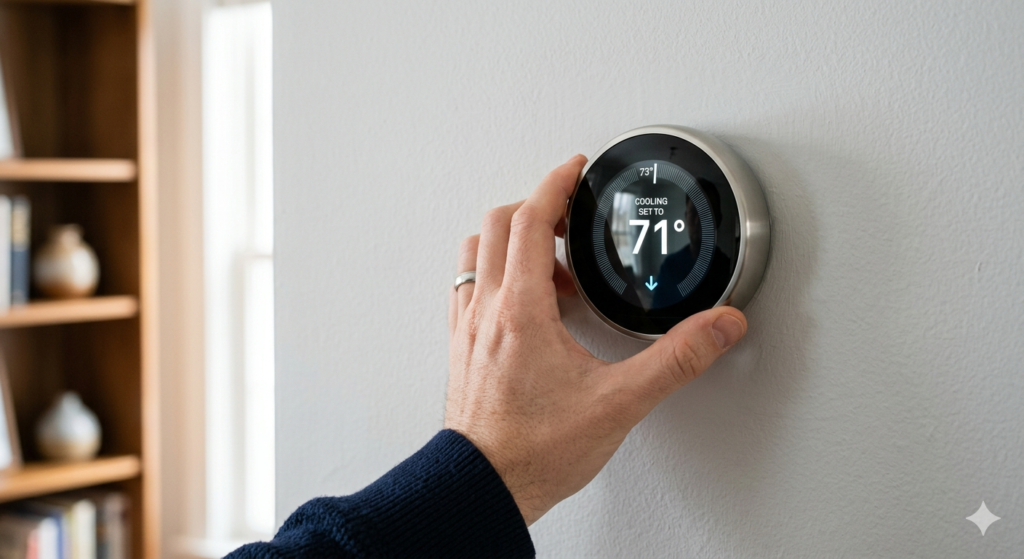
Standard thermostats only know whether the house is hot or cold right now. Smart home upgrades, like intelligent thermostats, learn your family’s routine. They track when you leave for work, monitor local weather forecasts, and automatically lower the heating when the house is empty. These devices typically pay for themselves in energy savings within the first two years of use.
High-Cost Ideas: Deep Retrofit Investments
When you are ready to fundamentally transform your home into a low-carbon, high-performance building, you move into the realm of high-cost investments. These require professional contractors and serious capital.
1. The Thermal Envelope
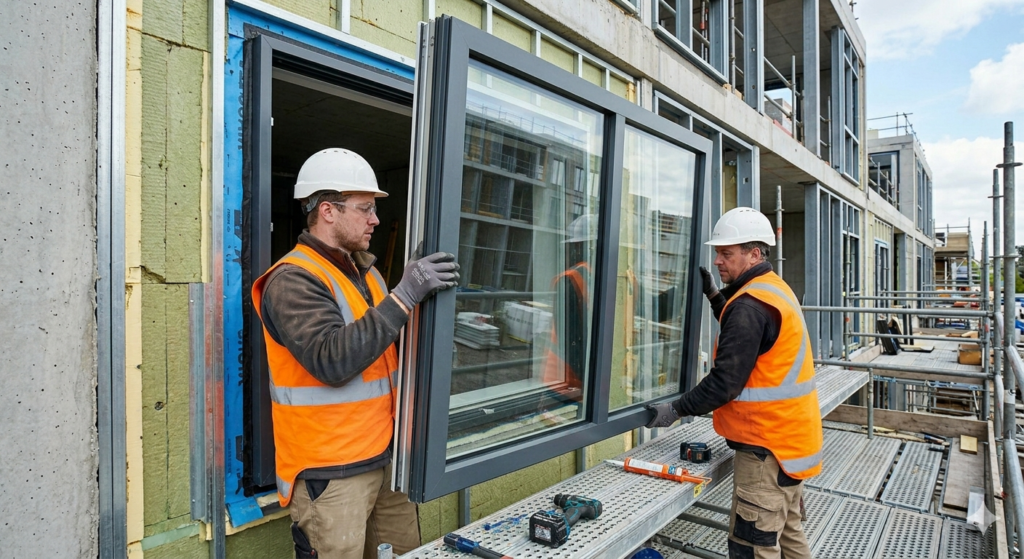
This includes wrapping the exterior of the house in continuous solid wall insulation, excavating suspended floors to add thermal barriers, and replacing drafty single-pane windows with thermally broken triple glazing. These are the most expensive, but also the most impactful, steps you can take.
2. Low-Carbon Heating and Renewables
Once the fabric of the building is insulated, you can swap your fossil fuel boiler for a highly efficient air source heat pump. Combining this with a rooftop solar photovoltaic (PV) array can push your property toward Net Zero energy consumption.
Because these high-cost items interact with each other (e.g., you cannot size a heat pump correctly without knowing your insulation levels), they require rigorous planning. Before spending thousands of dollars, you must commission a professional audit and develop a clear Retrofit Roadmap to sequence the work correctly.
Conclusion
Creating a comfortable, affordable home is not an exclusive luxury reserved for massive renovation budgets. By exploring various improve home energy efficiency ideas, you can take immediate action today. Start with simple quick wins energy saving tasks like sealing drafts and installing radiator reflectors. As your budget allows, progress to mid-range smart home upgrades and diy insulation. Finally, use the savings generated by these small steps to help fund the high-cost, permanent architectural upgrades that will truly future-proof your property.
Frequently Asked Questions (FAQ)
1. Do radiator reflectors actually work?
Yes. Studies and energy trusts confirm that purpose-built radiator foil effectively reflects heat back into the room rather than letting it bleed into the wall. They are most effective when placed behind radiators that are mounted on uninsulated, external walls.
2. What is the fastest way to save energy at home without spending any money?
The fastest free method is behavioral change. Turn your boiler’s flow temperature down to 60°C (140°F), wash your clothes on cold cycles, turn off appliances at the wall instead of leaving them on standby, and close your curtains the moment the sun goes down to trap the heat inside.
3. Are smart thermostats really worth the investment?
For most households, yes. While they require an upfront cost, their ability to meticulously schedule heating, utilize geofencing (turning the heat down when your phone leaves the house), and prevent overheating means they consistently lower energy consumption, usually paying for themselves within 12 to 24 months.
4. Should I replace my old windows to save energy?
Replacing windows is a high-cost idea. While modern double or triple-glazed windows are highly efficient, the financial “payback period” on energy savings alone can take decades. If you have a limited budget, you will save much more energy per dollar spent by adding attic insulation and rigorous weatherstripping to your existing windows first.