Historic and pre-war houses offer unmatched architectural charm, but they often harbor a hidden, deeply unpleasant secret. Behind the beautiful crown molding and original hardwood floors, many older properties suffer from persistent dampness, musty odors, and stagnant air. For the families living inside, this is more than just a nuisance; it is a serious health hazard.
Older buildings were originally constructed with breathable materials and relied on open fireplaces and drafty windows to constantly cycle fresh air. When modern homeowners seal these drafts and block old chimneys without adding active ventilation, moisture and pollutants become trapped. Addressing this imbalance is critical. Transforming a damp, musty property into a safe, breathable sanctuary requires a firm understanding of building physics and biological triggers.
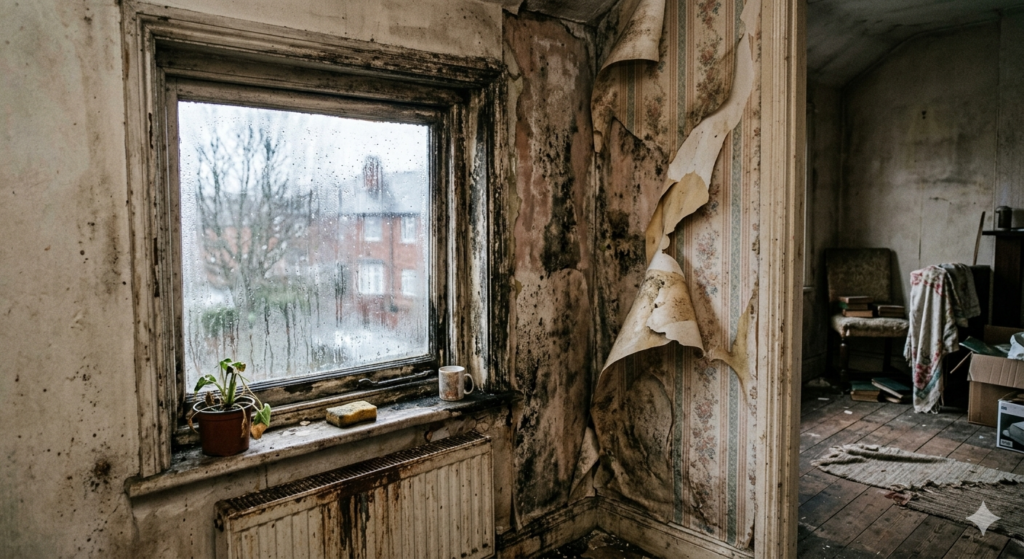
The Hidden Health Risks of Damp Buildings
What is the secret to improving indoor air quality in old homes? Improving indoor air quality in old homes requires a systematic approach to humidity control and ventilation. It involves identifying the root causes of moisture, safely removing mold spores, and ensuring continuous fresh air circulation to dilute indoor pollutants and create a healthy living environment.
When a house is continuously damp, the air becomes saturated. This heavy, wet air feels colder in the winter and more oppressive in the summer. More importantly, it creates the perfect biological breeding ground for microscopic threats.
Dust mites thrive in high humidity, and their waste is a primary trigger for asthma and severe allergies. When you combine high moisture levels with poor ventilation, the indoor air can quickly become more polluted than the outdoor air in a busy city, leading to chronic respiratory irritation and fatigue for the occupants.
Mastering Humidity Control
The foundation of a healthy home renovation is establishing rigorous humidity control. An average family of four produces roughly 10 to 14 liters (2.5 to 3.5 gallons) of water vapor every single day simply by cooking, bathing, drying clothes, and breathing.
In a modern, properly ventilated home, this moisture is extracted outside. In an unventilated old home, it soaks into the plaster, the soft furnishings, and the carpets.
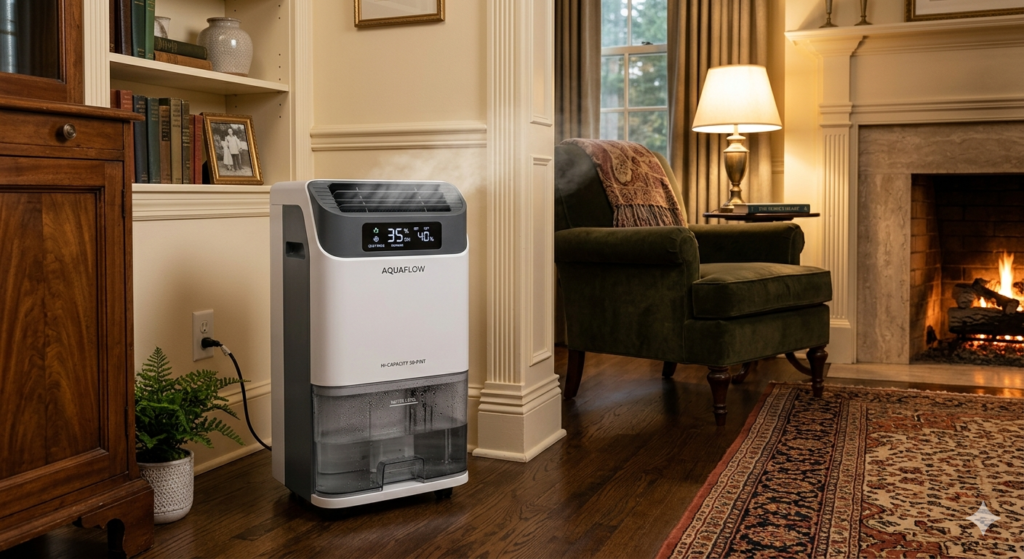
Before investing in expensive structural changes, you must aggressively lower the ambient moisture. Utilizing a dehumidifier placed centrally in the home can pull liters of water out of the air daily. This provides immediate relief to the occupants, dries out the surface materials, and halts the active growth of biological pollutants while you plan permanent mechanical ventilation upgrades.
Strategies for Removing Mold Spores
Dampness inevitably leads to mold. Black, green, or white fungal patches are not merely aesthetic issues; they actively release microscopic spores into the air to reproduce. Inhaling these spores causes allergic reactions and long-term lung inflammation.
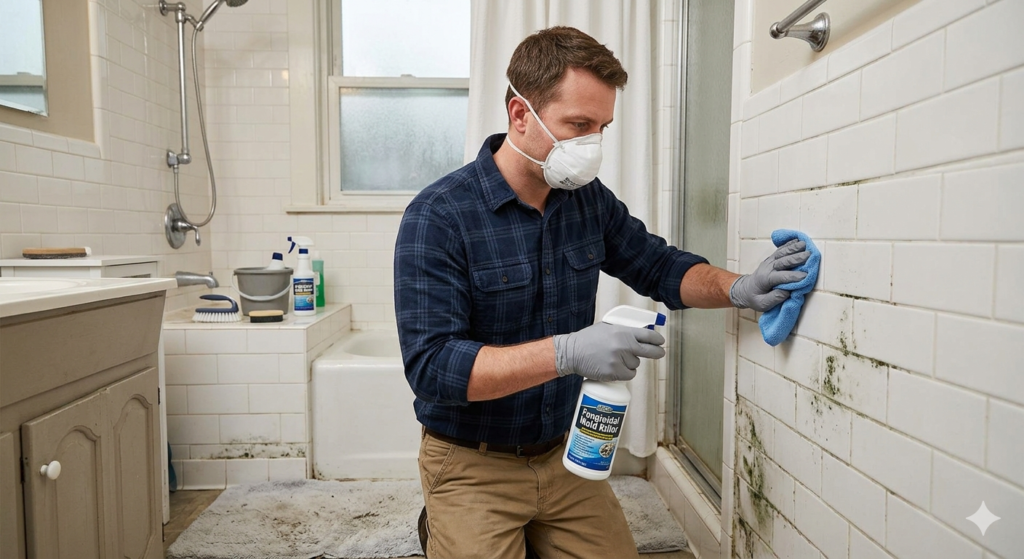
Simply wiping away mold with bleach is a temporary aesthetic fix. Bleach removes the color but often leaves the root system intact inside porous surfaces like wood or drywall. Removing mold spores permanently requires a two-step approach:
- Eradication: Use specialized fungicidal washes or hydrogen peroxide solutions that penetrate the surface and destroy the biological root structure.
- Starvation: Mold cannot grow without moisture. By fixing the underlying leak or lowering the room’s relative humidity below 50%, you mathematically eliminate the mold’s ability to survive and reproduce.
VOCs Renovation: Upgrading Safely
When homeowners attempt to fix up old houses, they often inadvertently worsen the air quality. Installing new carpets, applying standard latex paints, and using chemical sealants introduce Volatile Organic Compounds (VOCs) into the home.
During a VOCs renovation cycle, these chemicals off-gas into the trapped indoor air for months or even years. In a damp home without proper ventilation, these toxic gases accumulate alongside the mold spores, creating a highly toxic atmosphere.
To mitigate this, always select zero-VOC mineral or clay-based paints, avoid synthetic carpets in favor of hard flooring, and use mechanical fasteners instead of chemical glues whenever possible.
Steps to a Healthy Home Renovation
Improving indoor air quality in old homes requires integrating health-conscious decisions into your broader home improvement strategy.
- Step 1: Stop the Ingress. Identify and repair external leaks, broken gutters, and rising damp issues. You cannot dry a house if water is actively entering from the outside.
- Step 2: Establish Extraction. Install high-quality, continuous extraction fans in the kitchen and bathrooms to vent moisture at the source before it migrates to the rest of the house.
- Step 3: Integrate Whole-House Systems. If you are undertaking major energy upgrades, incorporating a whole-house fresh air system is mandatory. For a comprehensive overview of how to balance airtightness with fresh air and clean heating, consult our Decarbonization Guide.
Conclusion
Living in a historic property does not mean you must accept a musty, unhealthy environment. By prioritizing humidity control and actively removing mold spores, you can stabilize the internal climate of your house. Approaching your updates with a focus on a healthy home renovation—such as selecting low-emission materials to prevent a toxic VOCs renovation—ensures that the air you breathe is as pristine as your home’s architecture. Ultimately, managing moisture and establishing proper ventilation are the keys to preserving both the building’s structural integrity and the occupants’ long-term health.
Frequently Asked Questions (FAQ)
1. What is the ideal indoor humidity level for an older home?
The ideal indoor relative humidity (RH) should be kept between 40% and 60%. If it drops below 30%, the air becomes too dry, which can irritate respiratory tracts and cause historic wood to crack. If it consistently rises above 60%, it creates the perfect environment for dust mites and mold to flourish.
2. Will opening windows fix the dampness in my old house?
Opening windows is an excellent way to quickly flush out stale air and VOCs, a process known as “purge ventilation.” However, it is not a permanent solution for dampness, especially in winter. Leaving windows open allows expensive heat to escape and can actually draw in cold, damp outdoor air when it is raining. Mechanical extraction is much more reliable.
3. How do I know if my house has high levels of VOCs?
High levels of VOCs often present as a strong, lingering “new car” or chemical smell, particularly after painting, installing new flooring, or buying new furniture. Occupants may experience unexplained headaches, dizziness, or irritation of the eyes, nose, and throat. Using a digital indoor air quality monitor can help detect these invisible gases.
4. Can a dehumidifier replace the need for an extractor fan?
No. A dehumidifier is an excellent supplemental tool to pull ambient moisture out of a room, but it does not remove odors, VOCs, or stale carbon dioxide. An extractor fan physically removes the polluted, damp air from the house entirely, making it fundamentally necessary for bathrooms and kitchens.