Transforming an older, energy-inefficient house into a high-performance home is a massive undertaking. For most homeowners, tackling a complete deep energy retrofit all at once is financially and logistically impossible. However, the sheer scale of the project should not deter you from starting. The solution lies in understanding the steps to net zero retrofit and breaking the process down into manageable, affordable chunks over several years.
Attempting to upgrade your home haphazardly can lead to expensive mistakes, such as installing a heating system that becomes oversized once you finally insulate the walls. By creating a strategic, long-term plan, you can improve your home’s comfort and reduce your carbon footprint at a pace that suits your budget, without compromising the final result.
What is a Phased Retrofit?
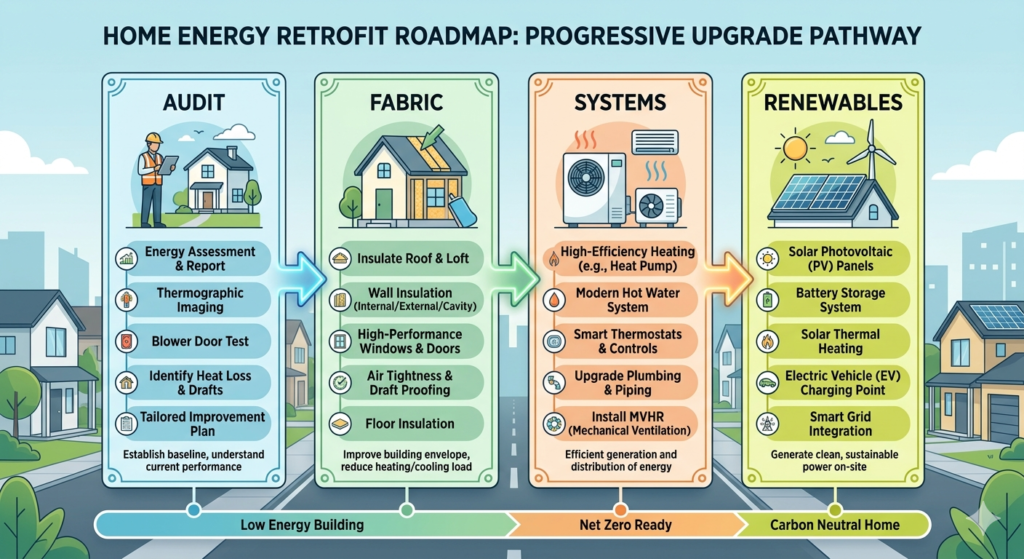
The steps to a net zero retrofit involve a strategic, phased approach to home decarbonization. It begins with a comprehensive energy audit, followed by fabric-first upgrades like insulation and airtightness. Next, efficient ventilation and heating systems are installed, culminating in renewable energy generation.
A phased approach allows you to spread the capital cost over five, ten, or even fifteen years. Each step builds upon the last, ensuring that no work needs to be undone or repeated as you move closer to your ultimate energy efficiency goals.
Why You Need a Retrofit Roadmap
The core of successful home improvement planning is avoiding “lock-in.” Lock-in occurs when an early renovation decision prevents you from achieving higher efficiency later. For example, replacing your windows but leaving them in their original alignment might make it impossible to properly connect them to exterior wall insulation down the line.
To avoid this, you must establish a retrofit roadmap. This is a master document that outlines exactly what needs to be done and in what sequence. It provides an energy upgrade timeline that aligns with your family’s financial capabilities and life events.
Step 1: Assessment and Master Planning
Before you buy a single roll of insulation, you must understand your starting point. The first phase involves gathering data and creating your master plan.
- Commission an Energy Audit: Hire a professional to conduct a blower door test and thermal imaging survey. This reveals exactly where your home leaks heat.
- Energy Modeling: A building physicist or specialized architect can put your home’s data into software to predict how different upgrades will perform.
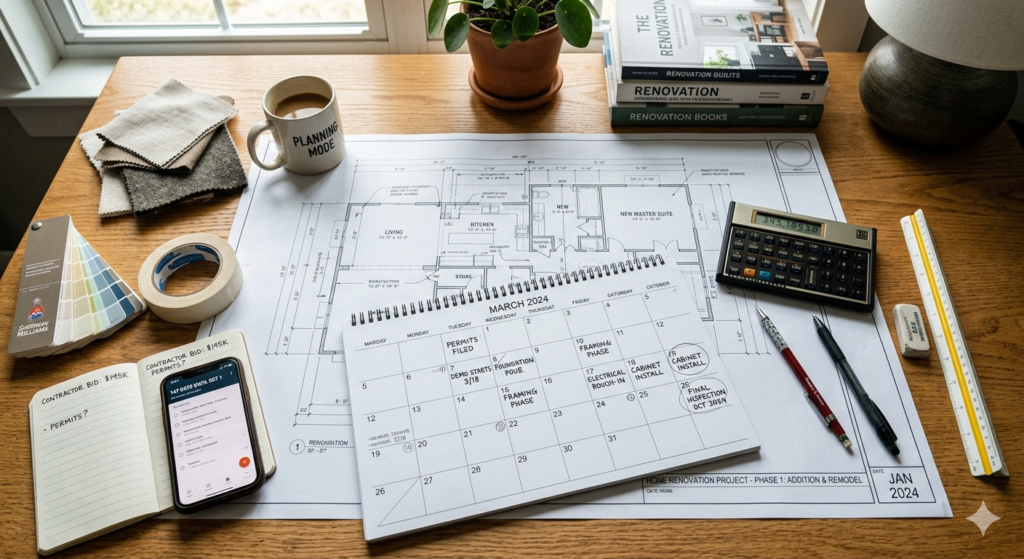
- Document Everything: Managing multiple contractors, budgets, and sequential stages over several years requires intense organization. Utilizing a physical project management planner/journal can help keep your blueprints, contact lists, and timelines securely in one place.
Step 2: The Fabric First Approach
Once you have your plan, the physical work begins with the building envelope. This is the cornerstone of any staged renovation.
You must focus on reducing the demand for energy before you think about how to generate it. This phase involves:
- Airtightness: Sealing drafts around floors, ceilings, and penetrations.
- Insulation: Upgrading the loft, walls, and floors to high thermal standards.
- Windows and Doors: Replacing old, leaky units with double or triple-glazed alternatives.
Because these tasks often involve significant disruption, they are frequently grouped together room-by-room or floor-by-floor. For a deeper understanding of why this sequence matters, consult our comprehensive Deep Energy Retrofit Guide.
Step 3: Upgrading Building Services
With the thermal envelope secured, your home will require drastically less energy to heat and cool. Furthermore, because it is now airtight, it will require a new strategy for fresh air.
- Mechanical Ventilation: Installing a system like Mechanical Ventilation with Heat Recovery (MVHR) is critical at this stage to prevent moisture buildup and ensure healthy indoor air quality.
- Right-Sized Heating: Now that the home’s heating demand is minimized, you can replace your old fossil-fuel boiler with a highly efficient, low-temperature system like an air-source heat pump. If you had installed the heat pump before insulating, it would have been drastically oversized, leading to high upfront costs and inefficient operation.
Step 4: Renewable Energy Generation
The final stage of the roadmap is reaching Net Zero. At this point, your home is highly insulated, ventilated, and electrified. Its energy consumption is a fraction of what it used to be.
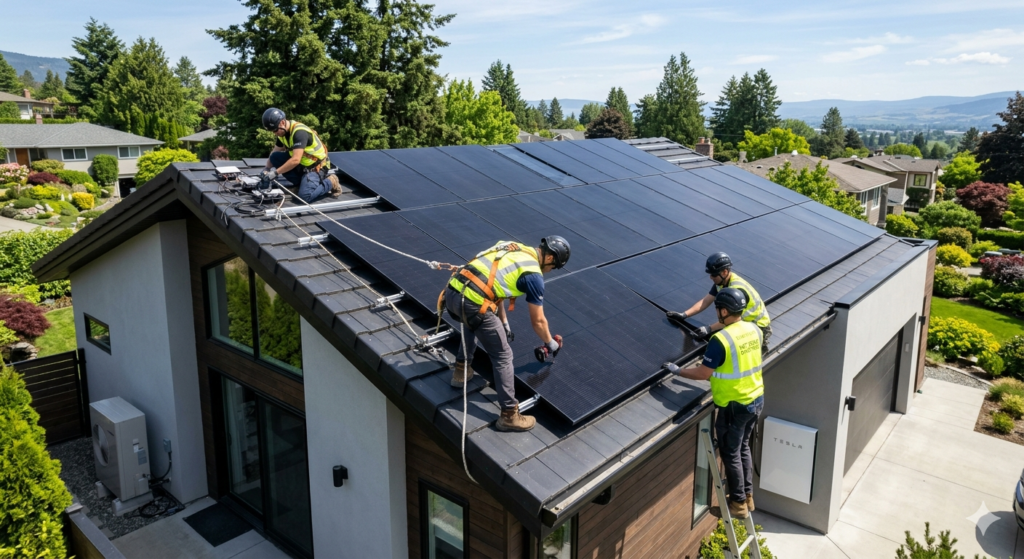
Now, you can install renewable energy systems, such as solar photovoltaic (PV) panels on your roof. Because your overall energy demand is so low, you will need a much smaller, more affordable solar array to offset your consumption and achieve true Net Zero status.
Conclusion
Embarking on a whole-house energy upgrade does not have to be a financial burden shouldered all at once. By following the correct steps to net zero retrofit, you can methodically transform your property over time. Creating a rigorous master plan ensures that every dollar spent contributes to the final goal without redundancy or structural risk. Through careful phasing and prioritizing the fabric of the building first, achieving a Net Zero, low-carbon home becomes a realistic and highly rewarding journey.
Frequently Asked Questions (FAQ)
1. How long does a phased retrofit usually take?
A phased retrofit can take anywhere from 3 to 15 years, depending entirely on the homeowner’s budget and living situation. Some choose to do it in two large phases (e.g., envelope first, systems second), while others tackle it room-by-room over a decade.
2. Can I install a heat pump before insulating my walls?
It is highly discouraged. If you install a heat pump in a poorly insulated house, you will need a massive, expensive unit to keep up with the heat loss. Once you eventually insulate the house, that large heat pump will be oversized, leading to short-cycling, inefficiency, and premature mechanical wear.
3. What is the biggest risk of a staged renovation?
The biggest risk is “lock-in”—doing work out of sequence that makes future upgrades difficult or impossible. For instance, finishing an exterior wall rendering before replacing the windows can make it impossible to seal the new windows properly without destroying the new render.
4. Do I need an architect for a phased retrofit?
While not strictly required for minor upgrades, consulting an architect or certified energy assessor who specializes in retrofits is highly recommended. They possess the software and building physics knowledge to create an accurate roadmap, preventing costly sequencing errors.