Embarking on a home improvement project is exciting, but the sheer volume of debris it generates can be overwhelming. For many homeowners, the cost of renting multiple dumpsters quickly eats into their contingency budget. Furthermore, sending tons of mixed materials straight to the landfill contradicts the goals of creating a sustainable, eco-friendly home.
If you want to protect your budget and the environment, you must actively plan to reduce construction waste renovation projects typically generate. By shifting your focus from quick disposal to careful site management, you can drastically lower your waste removal fees. Treating waste as a logistical challenge rather than an inevitable byproduct is the key to a cleaner, more efficient, and more affordable build.
What Does it Mean to Reduce Construction Waste?
To reduce construction waste during a renovation means implementing systematic site management to prevent usable materials from entering landfills. This involves careful deconstruction, precise material ordering, and rigorous waste diversion strategies, ultimately lowering disposal fees while minimizing the project’s overall environmental impact.
Historically, builders adopted a “throw everything in the bin” mentality because landfill fees were cheap. Today, environmental regulations and rising tipping fees make this linear approach financially punishing.
Effective waste reduction starts long before the physical work begins. It requires a fundamental shift in how you order materials, how you protect them from the weather, and how you dismantle the existing structure.
The Principles of Lean Construction
To minimize waste, professional builders often adopt the principles of lean construction. This philosophy focuses on maximizing value while ruthlessly eliminating physical and operational waste on site.
The most common source of waste in a residential project is over-ordering. Contractors frequently order 15% to 20% more material than necessary to account for mistakes or offcuts. While a small buffer is practical, a large one guarantees excess material will end up in the trash. By accurately measuring your spaces and planning your cuts (like mapping out drywall sheets before hanging them), you reduce the amount of scrap generated.
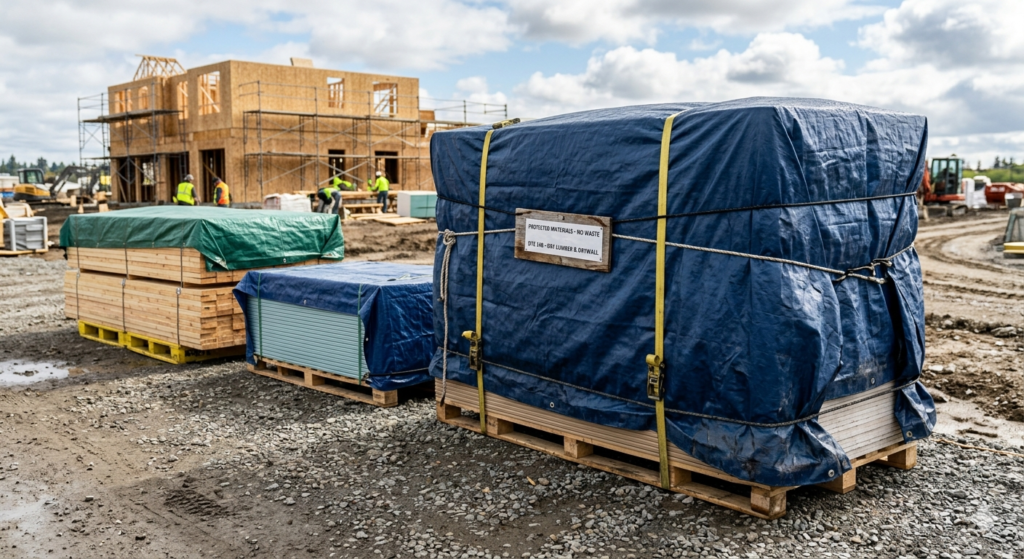
Another core tenet of lean construction is proper storage. Millions of dollars of building materials are thrown away every year simply because they were left exposed to the rain. Storing timber off the ground and keeping plasterboard completely dry ensures your new materials do not become waste before they are even installed.
Sustainable Site Management and Sorting
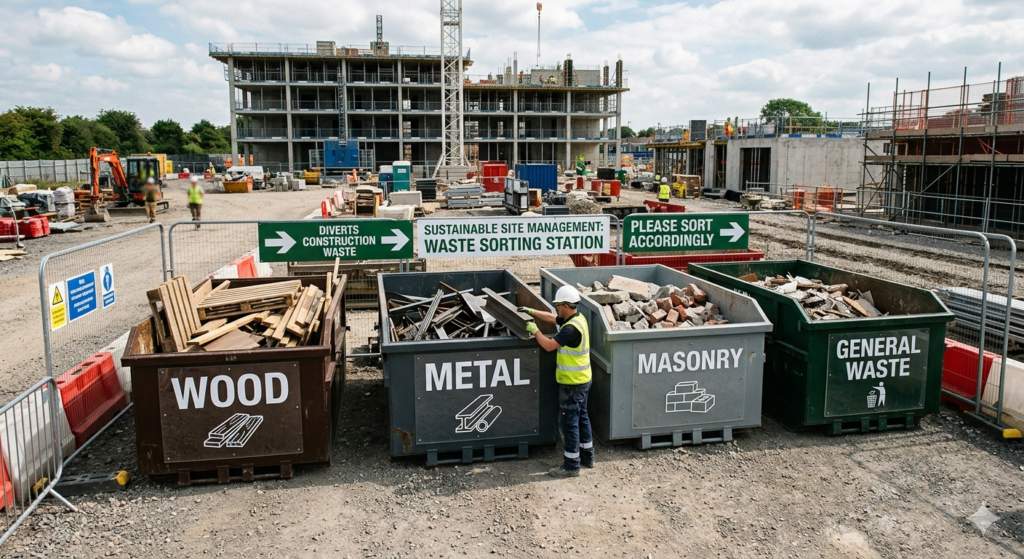
A chaotic job site is a wasteful job site. Sustainable site management requires establishing physical zones for different types of debris right from day one.
When you toss clean timber, broken bricks, and plastic packaging into the same pile, it all becomes contaminated trash. If you separate them as they are generated, they remain valuable resources. Utilizing heavy-duty rubbish sorting bags allows you to clearly designate specific areas for metal recycling, clean wood, and masonry.
This organized approach requires discipline from everyone on site. However, taking five extra seconds to put a copper pipe offcut into the “metal bin” rather than the general trash saves significant time and money when it is time to haul the materials away.
Exploring Skip Hire Alternatives
Renting a massive, mixed-waste dumpster is the most expensive way to handle debris. Because the waste company has to manually sort the trash at their facility to comply with environmental regulations, they pass that heavy labor cost onto you.
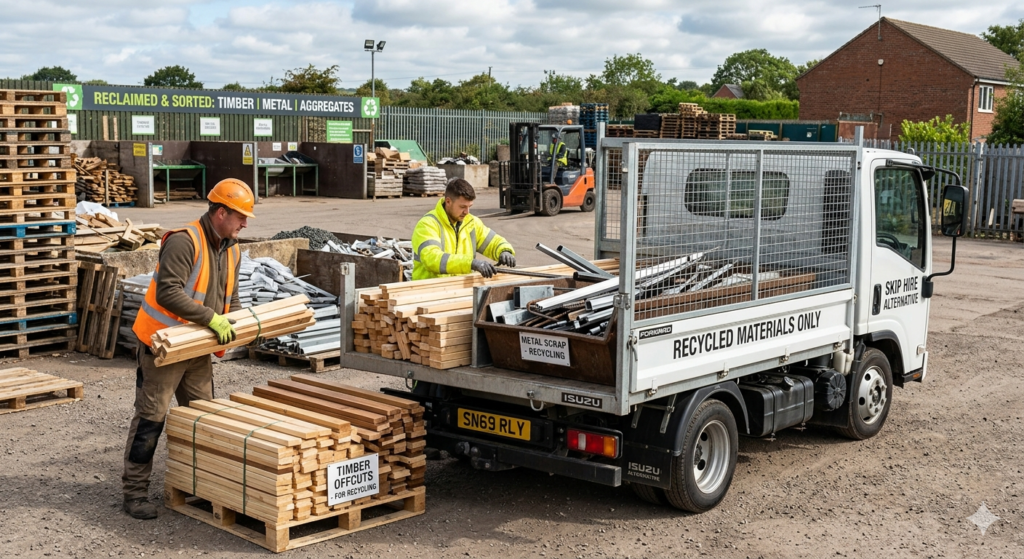
Instead, look into skip hire alternatives. If you have successfully sorted your site, you can often hire specialized recycling companies to pick up specific materials for a fraction of the cost.
- Scrap metal collectors will often take copper, steel, and aluminum for free, or even pay you for it.
- Clean, unpainted wood can often be chipped for mulch or biomass fuel.
- Broken bricks and concrete can be taken to aggregate crushers, where disposal fees are significantly cheaper than standard landfills.
By diverting these heavy items away from the general trash, you might only need a micro-skip for the truly unrecyclable waste. This strategy aligns perfectly with the broader philosophies outlined in our Circular Construction Guide.
Maximizing Waste Diversion Strategies
Waste diversion means actively finding a home for an item so it bypasses the landfill entirely. The easiest way to divert waste is to let someone else take it off your hands.
Items like old kitchen cabinets, perfectly intact windows, and leftover boxes of tile are highly sought after. Donating these to architectural salvage charities or local community reuse centers provides tax deductions and helps others afford building materials.
For items that charities will not take—such as half-empty buckets of paint, offcuts of rigid insulation, or extra soil from an excavation—community boards like Freecycle or local Facebook groups are invaluable. You will be surprised at how quickly local DIYers will arrive to haul away your “trash” for their own small projects.
Conclusion
Managing a home improvement project responsibly requires looking beyond the finished aesthetic to consider the environmental impact of the process itself. To successfully reduce construction waste renovation projects produce, you must be proactive. By embracing lean construction techniques, prioritizing sustainable site management, and actively seeking out skip hire alternatives, you significantly lower your disposal fees. Ultimately, rigorous waste diversion proves that a beautifully renovated home does not have to come at the expense of a burdened local landfill.
Frequently Asked Questions (FAQ)
1. What is the most expensive type of construction waste to dispose of?
Mixed, unsorted waste is the most expensive because it requires heavy manual labor at the waste transfer station to separate recyclable materials from true trash. Additionally, heavy materials like plasterboard (drywall) and wet concrete incur high landfill tipping fees, which are usually charged by weight.
2. Can I throw plasterboard (drywall) into a general mixed skip?
In many regions, no. Plasterboard contains gypsum. When mixed with biodegradable waste in a landfill, it can produce toxic hydrogen sulfide gas. Most waste management companies require plasterboard to be bagged separately or placed in a dedicated gypsum recycling skip.
3. How do I estimate how much waste my renovation will produce?
It is difficult to estimate precisely, but a general rule of thumb for a full gut renovation of a standard room is one 6-yard skip per room. However, if you practice careful deconstruction and rigorous sorting, you can often reduce this volume by 50% to 70%.
4. Are skip bags a good alternative to metal dumpsters?
Yes, heavy-duty woven skip bags (like the “Bagster”) are excellent skip hire alternatives for smaller projects or sites with restricted access. You buy the bag, fill it at your own pace, and pay a flat fee for a truck to crane it away. However, they hold less weight than steel skips, so they are not ideal for heavy masonry demolition.