Renovating a home is a deeply personal journey. It is a rare opportunity to express your unique aesthetic, improve your daily workflow, and create a space that genuinely feels like a sanctuary. However, in the modern era, home design must answer to a higher calling than just visual appeal.
Many homeowners mistakenly believe that “green building” requires sacrificing style for clunky technology or settling for a sterile, hyper-modern look. In reality, true sustainability seamlessly blends form and function. By integrating eco-conscious philosophies into your architectural planning, you can craft a home that is visually stunning, remarkably comfortable, and environmentally responsible. It is about making aesthetic choices that actively work with nature, rather than fighting against it.
What is Sustainable Home Design?
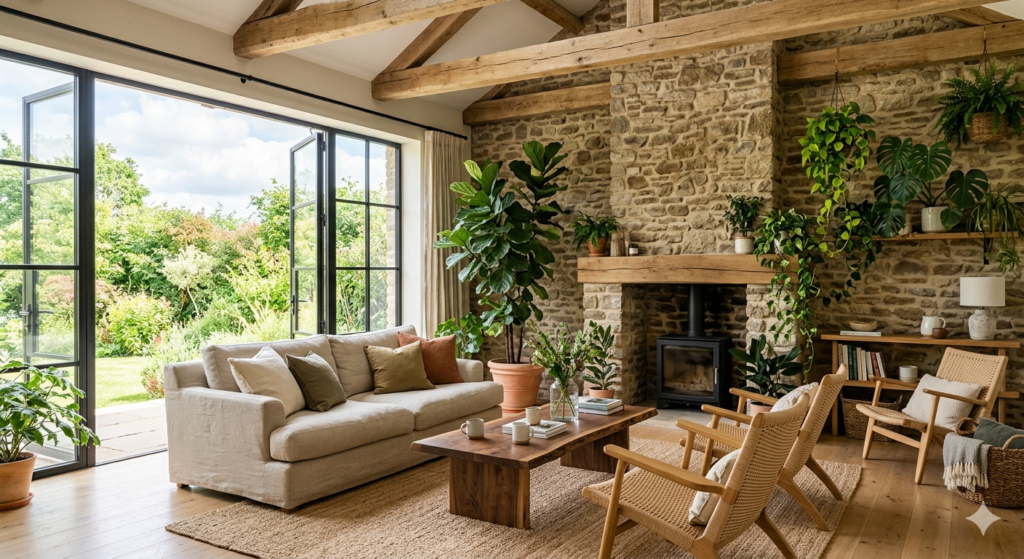
What are sustainable design ideas for renovation? Sustainable design ideas for renovation are aesthetic and architectural choices that minimize environmental impact while maximizing indoor comfort. This approach combines energy-efficient building physics, natural and recycled materials, and passive heating strategies to create beautiful, functional, and deeply eco-friendly living spaces.
At its core, eco-friendly design moves beyond simply picking low-toxicity paint or buying a recycling bin. It addresses the fundamental way a building interacts with its environment.
A sustainable renovation views the house as an active participant in its own climate control. By choosing the right materials, textures, and spatial layouts, your interior design can actually lower your utility bills and reduce your household’s carbon footprint.
Harnessing the Sun: Passive Solar Gain
One of the most elegant sustainable design ideas for renovation is utilizing the free energy provided by the sun. This is known as passive solar gain.
Instead of hiding behind heavily draped, small windows and relying on artificial heating, passive design invites the winter sun deep into the living space. By strategically placing large, high-performance windows on the southern elevation (in the Northern Hemisphere), sunlight pours into the room during the coldest months.
To prevent overheating in the summer when the sun is higher in the sky, architects incorporate deep exterior roof eaves, stylish slatted pergolas, or exterior louvers. These design features add immense architectural interest to the facade while acting as natural, seasonal temperature regulators.
The Power of Thermal Mass
To truly capitalize on passive solar heating, your interior design must incorporate thermal mass. Thermal mass refers to heavy, dense materials that have the ability to absorb, store, and slowly release heat energy.
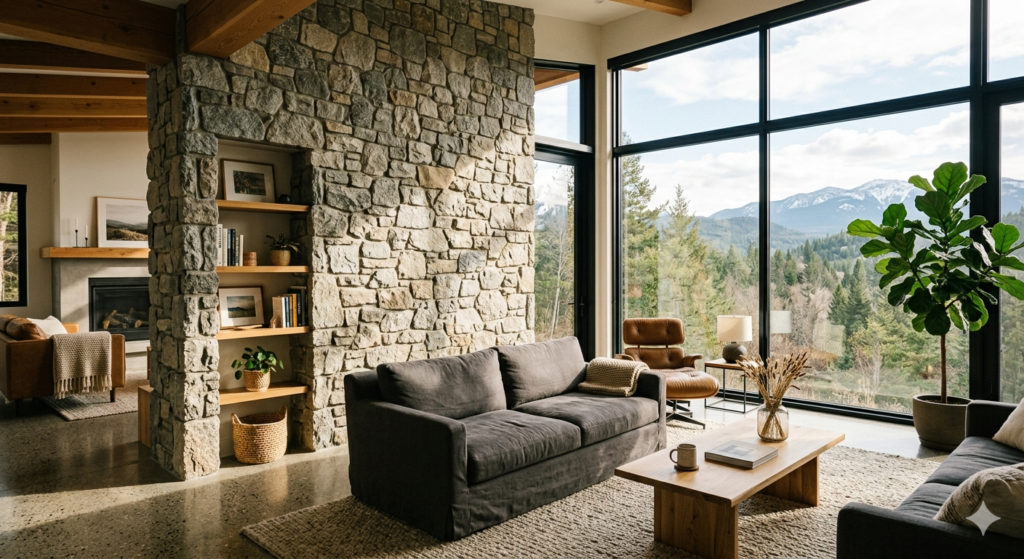
Materials like exposed brick, natural stone, rammed earth, and polished concrete are not just trendy industrial design elements; they are thermal batteries. When the winter sun hits a dark stone floor, the stone absorbs the heat throughout the day. When the sun goes down and the room temperature drops, the floor slowly radiates that stored warmth back into the living space, stabilizing the indoor climate.
For those interested in how these elemental building techniques have been utilized globally and historically, resources like “The Barefoot Architect” offer profound inspiration on designing with climate, local materials, and nature in mind.
Bringing Nature Inside: Biophilic Design
Humans possess an innate instinct to connect with nature, a concept architects call biophilic design. Incorporating this philosophy into your renovation drastically improves both the aesthetic and the psychological comfort of your home.
Biophilic design is not just about putting a potted plant in the corner. It is a holistic approach that includes:
- Visual Connections: Framing views of trees, gardens, or water features through strategically placed picture windows.
- Natural Materials: Using raw, organic textures like unpainted timber, woven rattan, clay plaster, and natural cork flooring.
- Living Features: Installing integrated “living walls” (vertical gardens) or indoor water features that purify the air and provide soothing ambient noise.
Studies show that living in a biophilic environment lowers stress levels, improves cognitive function, and creates a profound sense of tranquility, proving that good design is fundamentally good for your health.
Crafting Character with Recycled Interiors
A truly sustainable aesthetic rejects the “fast furniture” culture of buying cheap, mass-produced items destined for the landfill. Instead, it embraces the unique character of recycled interiors.
By utilizing salvaged and upcycled materials, you inject your home with a sense of history and bespoke craftsmanship that cannot be bought in a big-box store. Consider integrating:
- Reclaimed wood for kitchen islands or open shelving.
- Recycled glass countertops or terrazzo tiles made from construction debris.
- Vintage, re-upholstered furniture instead of newly manufactured pieces.
This approach ties beautifully into the philosophies explored in our guide on Retrofitting Old Houses. When you preserve original materials or source salvaged architectural elements, you maintain the historic narrative of the property while saving massive amounts of embodied carbon.
Conclusion
Creating a green home does not mean compromising on beauty or luxury. The most innovative sustainable design ideas for renovation prove that environmental stewardship and high-end aesthetics go hand in hand. By embracing biophilic design, harnessing the sun through passive solar gain, utilizing heavy thermal mass, and curating recycled interiors, you craft a space that works intelligently with the natural world. Ultimately, a sustainable renovation results in a home that is visually captivating, incredibly comfortable, and profoundly respectful of the planet.
Frequently Asked Questions (FAQ)
1. Is biophilic design expensive to implement?
It does not have to be. While a custom, automated vertical living wall is a premium feature, the core principles of biophilic design are often free or low-cost. Maximizing natural light by removing heavy curtains, choosing natural wood finishes over plastics, and incorporating diverse indoor houseplants are highly affordable ways to connect your space with nature.
2. How does thermal mass work in the summer?
Thermal mass works both ways. In the summer, if the dense material (like a concrete floor) is kept shaded from the direct sun, it will absorb the ambient heat of the room during the hot day, keeping the air temperature cooler. At night, you open the windows to “purge” the stored heat with cool evening breezes, resetting the thermal battery for the next day.
3. What are the best materials for a recycled interior?
Reclaimed timber is the most popular, as it is incredibly durable and offers beautiful, dense grain. Other excellent options include recycled glass tiles, countertops made from recycled paper composite or crushed stone, and reclaimed bricks used for interior accent walls.
4. Can I use passive solar gain in a cold, cloudy climate?
Yes. Even on cloudy winter days, solar radiation penetrates the clouds and can be captured by high-performance windows. While the effect is less dramatic than in a sunny, cold climate (like Colorado), properly oriented triple-glazed windows will still capture more heat energy than they lose, contributing positively to your home’s thermal balance.